Blog Article
Jon Sumrall Has 3 Conference Titles And A 79.6% Win Rate. Here’s The Red Flag Buried In His Record That Could Doom Him In The SEC

The Bottom Line
Jon Sumrall is a clear upgrade in process and upside over Billy Napier.
But whether he’s a true results upgrade in the SEC will hinge almost entirely on staff hires and whether he can translate his Group of Five discipline-and-physicality pitch into a cleaner, more explosive product than Napier ever managed in Gainesville. On résumé and trajectory, you can justify calling this a good, even ambitious, hire for Florida. But it lands with risk and fan skepticism because it looks, on the surface, like “Napier 2.0” from another G5 power.
Let’s dig into the data.
Résumé vs. Résumé
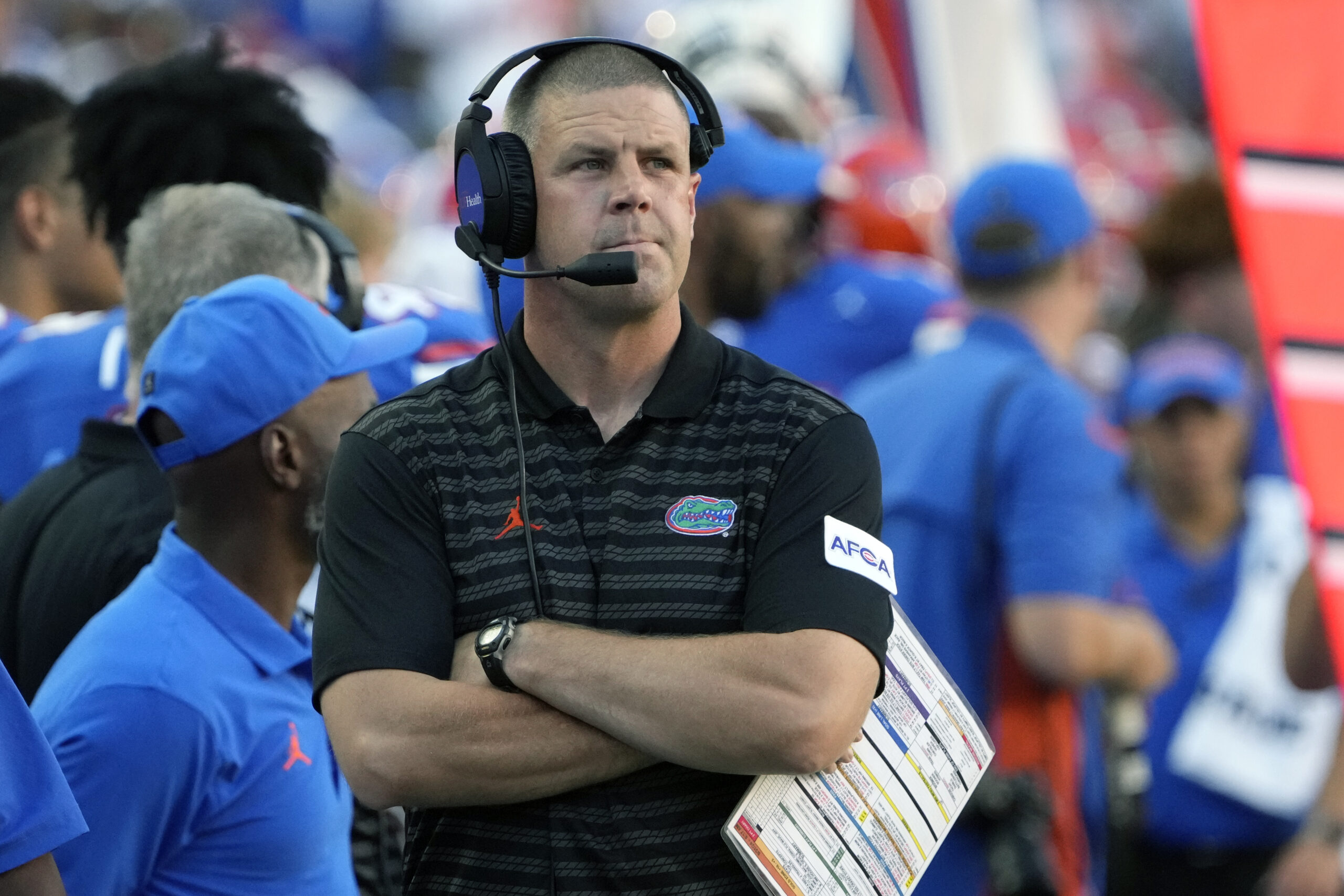
The surface-level comparison writes itself: Florida just fired a coach who went 22-23 over four years after a dominant G5 run, and replaced him with a coach who went 43-11 over four years during a dominant G5 run. But dig one layer deeper and meaningful distinctions emerge.
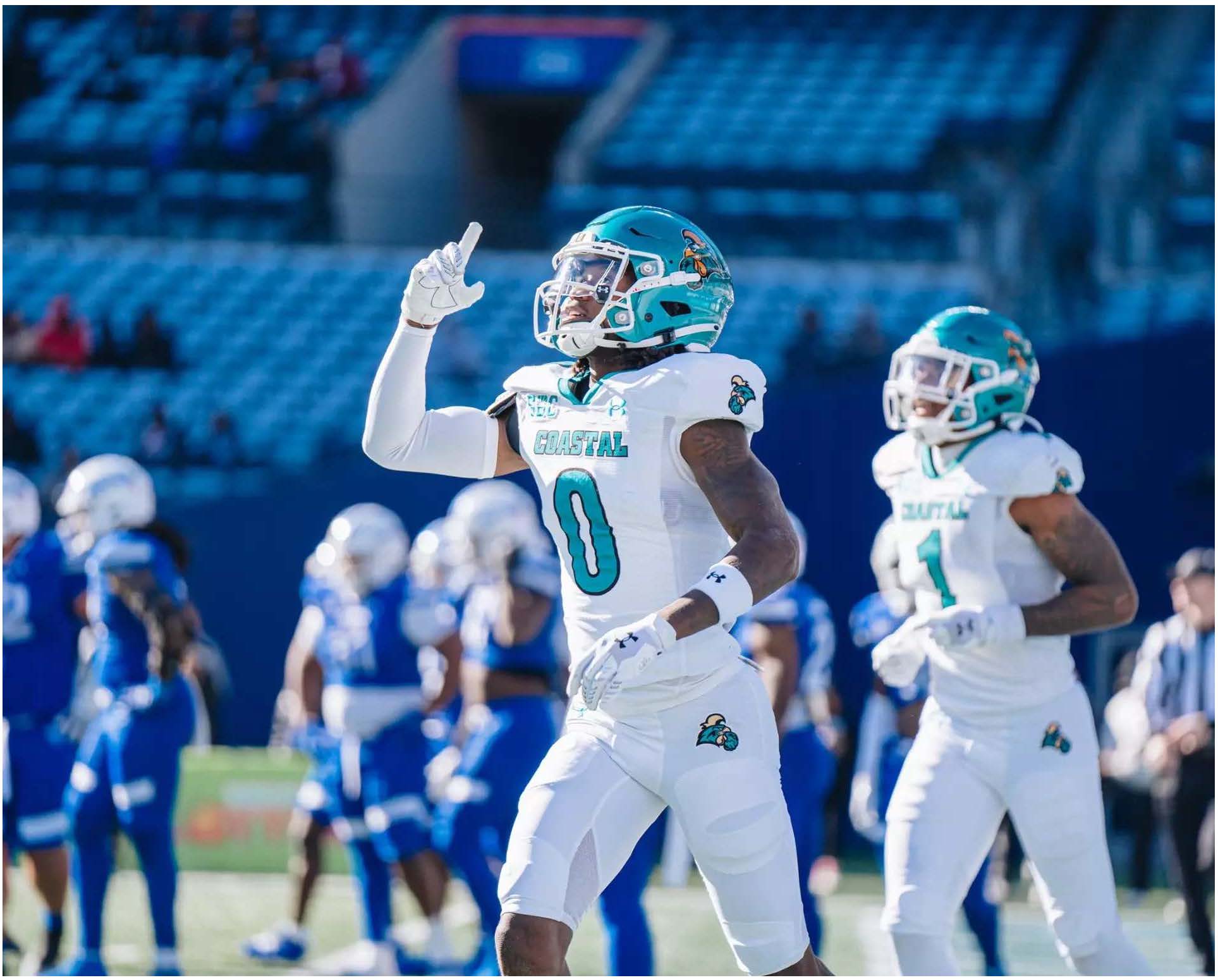
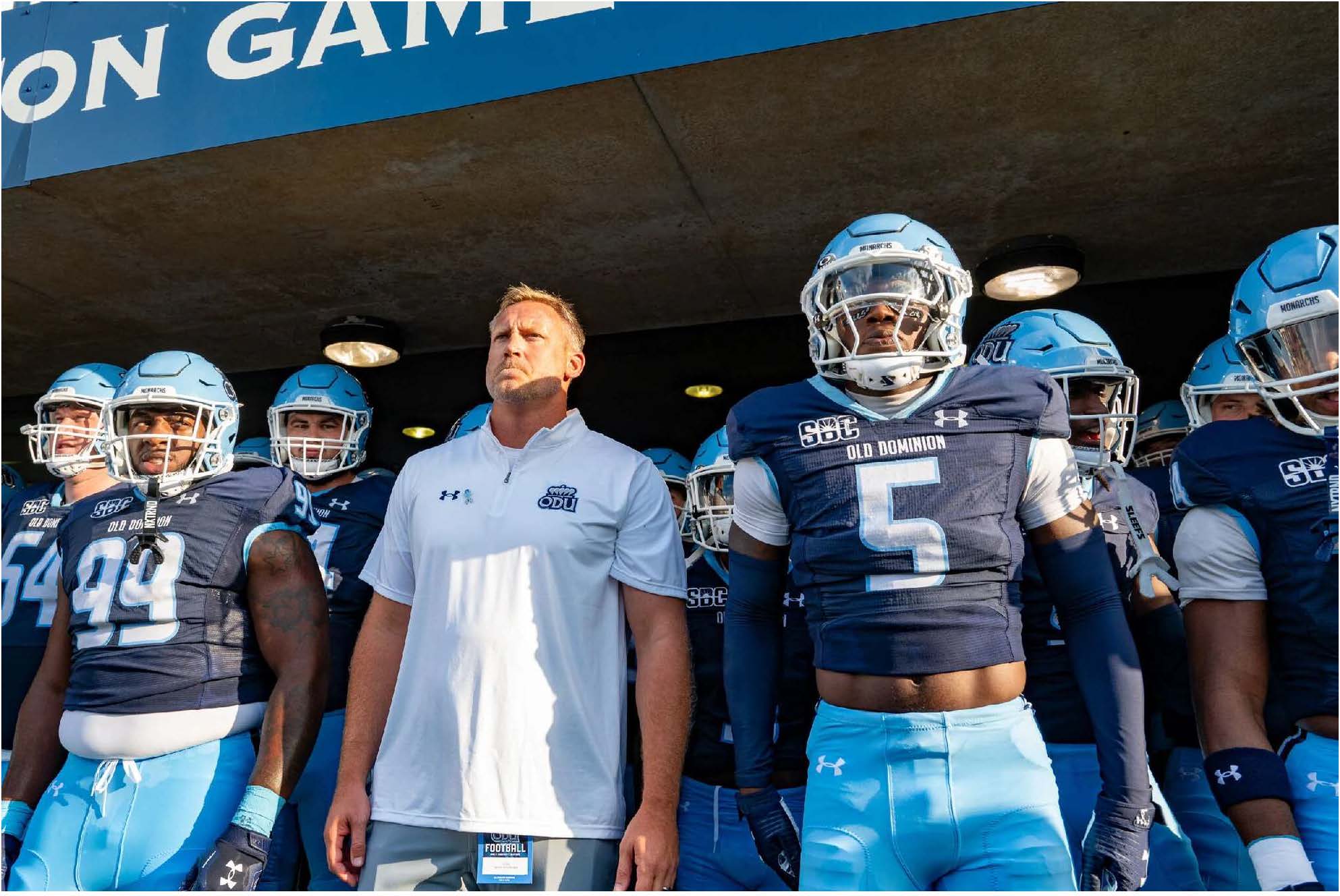
Sumrall has already won three conference championships – two Sun Belt titles at Troy and an American Athletic Conference title at Tulane – with Tulane appearing in the AAC title game again in 2025. He’s made a conference championship game in every season as a head coach. Napier never won a conference title at Florida and finished 12-16 in SEC play, with one 8-5 season sandwiched between losing years and no serious division contention.
Head-to-Head Coaching Records
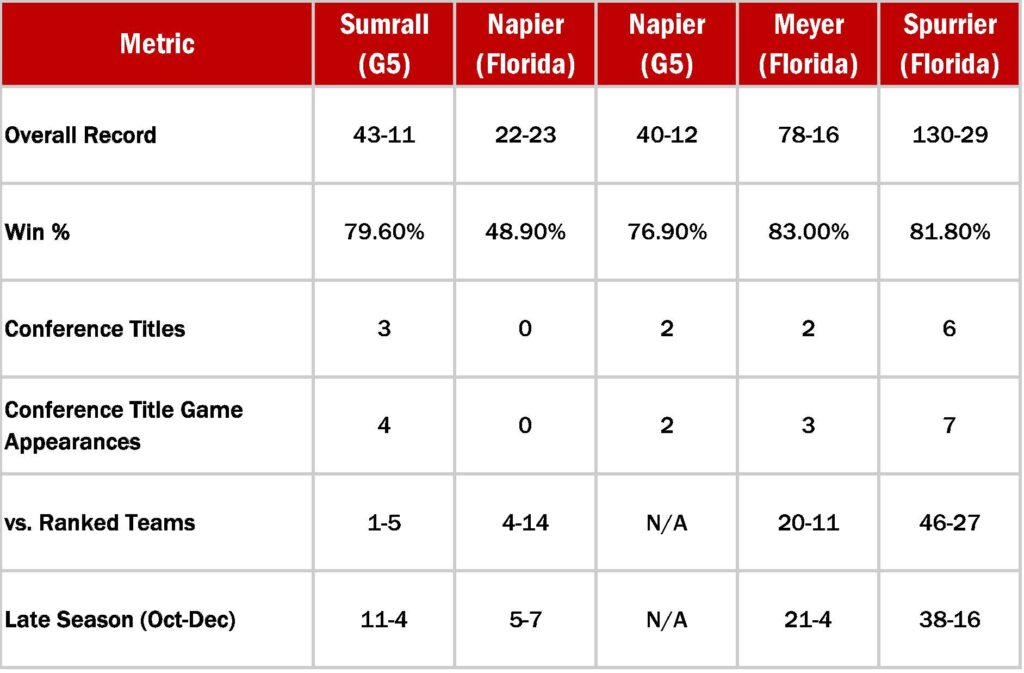
On raw head-coaching record, championship appearances, and consistency, Sumrall’s four-year run is substantially stronger than Napier’s four years in Gainesville – and matches or exceeds what Napier did at Louisiana before he jumped to the SEC.
The Efficiency Profile: SRS & SOS Analysis
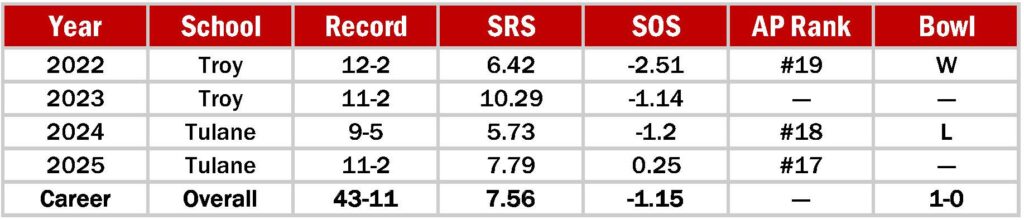
Simple Rating System (SRS) measures how many points better or worse a team is than average on a neutral field. Strength of Schedule (SOS) shows whether a team faced above-average or below-average competition. Together, they tell a clearer story than wins and losses alone.
What the Numbers Mean
Sumrall’s teams average an SRS of +7.56, while their SOS is -1.15. Translation: his programs consistently performed about a touchdown better than an average FBS team on a neutral field while playing slightly below-average schedules.
His best season by the metric was 2023 Troy at +10.29 SRS, with top-25-quality production on a clearly G5 schedule. His 2025 Tulane squad posted a +7.79 SRS against a +0.25 SOS, showing he can maintain strong efficiency even as the competition creeps toward truly average.
The Troy vs. Tulane split is telling. Troy under Sumrall averaged +8.36 SRS against a soft -1.82 SOS, the profile of a bully in a weak conference. Tulane under Sumrall averaged +6.76 SRS against a -0.48 SOS, reflecting a tougher AAC slate. Even there, 2025’s 11-2 with positive SOS suggests a team that would profile like a mid-tier SEC bowl squad.
The bottom line: Sumrall’s SRS/SOS profile says “very good G5 operator beating mostly average-or-worse schedules by real margins.” It’s a stronger and more consistent efficiency résumé than what Florida just fired. But nothing in that profile proves he can hit the +15 SRS territory you need to chase titles against an SEC-caliber schedule.
What the Film Says: A Defensive Identity with Pro-Style Offense
Film analysis by Max Browne, ESPN analyst and former USC/Pitt quarterback, who reviewed every Tulane sack, turnover, and touchdown pass from this season. [LINK]
Jon Sumrall played linebacker at Kentucky and has never held an offensive coaching position. His stops at San Diego, Tulane (as an assistant), Troy, Ole Miss, and Kentucky were all on defense. This matters because it defines his program’s DNA.
The Defensive Philosophy
Reviewing every sack and turnover from Tulane’s 2025 season reveals a consistent philosophy: trust your front four, don’t get cute.
Sumrall’s defenses aren’t exotic pressure teams. They rely on the defensive line to generate a pass rush through twist-and-stunt packages rather than bringing extra rushers from the secondary. When they do blitz, it’s typically a single linebacker from depth – rarely a safety or corner, and rarely multiple backers at once.
The results speak for themselves:
- Both seasons at Troy: Top 10 nationally in scoring defense, allowing just 17.1 points per game
- 2024 Tulane: 20.1 points per game allowed
- 2025 Tulane: 22.8 points per game allowed
- 2025 national rankings: 36th in sacks, 24th in turnovers
For Florida fans, there’s an upside and a downside to this approach. The upside: it’s not gimmicky or scheme-dependent—it’s about fundamentals and trusting your players to win their matchups. The downside: opposing quarterbacks won’t face exotic pressure packages that require extensive preparation. This is old-school, come-right-at-you defense.
The Offensive Identity
Sumrall’s offensive coordinator for the past four years has been Joe Craddock, who became the youngest OC in college football when SMU hired him in 2014 and later the youngest OC in the SEC at Arkansas. The Craddock-Sumrall partnership has produced a distinctive offensive identity.
Reviewing every touchdown pass from Darian Mensah (2024) and Jake Retzlaff (2025) reveals clear themes. This offense leans pro-style: under center, heavy play-action, attacking vertically with deep overs and posts. It’s a different family tree than Lane Kiffin’s Art Briles spread or Ben Arbuckle’s QB-run-heavy RPO system.
The signature concepts:
- Play-action deep overs: Under center, big fake, receivers working across the field at depth
- Vertical posts: Taking the top off the defense, especially with Retzlaff in 2025 (4-5 touchdowns on identical pistol-formation deep post concepts)
- Tight end integration: Motions, flat routes, and seam threats creating coverage conflicts
Notably, this system shares DNA with what DJ Lagway ran at Florida last year, pro-style play-action with vertical concepts. That’s a potential recruiting pitch: “We’re not asking you to learn something completely different.”
There’s nothing in this offensive film that won’t translate to the SEC. But it requires talent, particularly speed on the perimeter and a quarterback who can make deep throws off play-action. Florida has historically recruited that speed. Whether Sumrall retains the quarterback to run it is another question.
Where the Upgrade Is Real
- Higher ceiling and week-to-week consistency: Four straight league title game appearances, multiple championships, and a dominant late-season record (11-4 in October through December). Napier’s Florida teams faded down the stretch (5-7 late season).
- Proven program flipper: Sumrall rapidly turned around two different programs (Troy and Tulane) rather than just sustaining one build. Napier’s Louisiana success was about maintaining what he inherited.
- Philosophical clarity: In his introductory press conference, Sumrall explicitly said that “having an explosive offense isn’t optional, it’s mandatory” at Florida. That acknowledgment of program-specific expectations is something Napier never clearly articulated.
- Reputation as a relationship builder: Analysts consistently describe Sumrall as someone who connects with players and gets the most out of his roster. His handling of the Tulane transition, promising not to poach players, earned praise for character and loyalty.
Where the Upgrade Is Fragile
- No Power-2 head coaching experience: Like Napier, Sumrall has never run a Power-conference program. The question isn’t whether he can win, it’s whether his model scales to SEC resources, NIL battles, and overlapping expectations with Georgia and FSU.
- Napier’s failure wasn’t just about his résumé: The Billy Napier experiment collapsed because of in-game management, special teams breakdowns, discipline issues, and confusion about offensive identity, not because he came from the Sun Belt. Sumrall’s margin to be an upgrade depends on avoiding those same organizational failures.
- Soft schedule strength: Sumrall’s career SOS of -1.15 means he hasn’t lived in a top-10 schedule world where +7 or +8 SRS is table stakes just to finish 9-3. The SEC will be a different animal.
- The optics problem: Florida ended up on Sumrall after publicly chasing Lane Kiffin. That “pivot after a miss” narrative is driving fan frustration and the “settled for another G5 guy” perception, regardless of Sumrall’s actual qualifications.
- A persistent penalty problem: Sumrall’s 2025 Tulane squad ranks 113th nationally in penalties per game (7.2), the bottom quartile in FBS. That’s not a one-year blip; his teams have consistently ranked in the middle-to-bottom third in penalty discipline. Sloppy procedural penalties, late hits, and undisciplined play are survivable against G5 competition. Against SEC defenses and hostile road environments, those self-inflicted wounds become drive-killers and game-changers. If Sumrall can’t clean up the penalty margin, the physicality he sells will look more like undisciplined football than tough football.
The Verdict
Jon Sumrall represents a meaningful résumé upgrade over Billy Napier with a higher win percentage, more championships, better late-season performance, and demonstrated ability to flip multiple programs quickly.
But this is not a “home-run SEC proven commodity” hire. It’s a higher-upside reroll of the identical dice with a coach whose winning profile and multi-school turnarounds give Florida more justification than they had with Napier in 2021.
The defensive identity is sound and translatable. The offensive philosophy fits what Florida has run. The staff hires, particularly whether Craddock comes along or whether Florida pursues a bigger name at OC, will determine the ceiling. (Sumrall has hired Buster Faulkner, currently the offensive coordinator at Georgia Tech, as the Gators’ new offensive coordinator. This move brings an experienced play-caller to run an explosive offense for quarterback DJ Lagway. Faulkner previously coached quarterbacks at Georgia and has a strong background in offensive schemes.)
Our assessment: Good but risky hire. Sumrall is better positioned to stabilize Florida above the 6-8 win purgatory Napier lived in. Whether he can push into consistent 9-10 win territory against SEC competition remains an open question, one that won’t be answered until we see how the model translates to Power-conference resources, expectations, and schedule strength.