Week 7 – Coaches Hot Seat Rankings

We’re officially past the halfway point of the 2025 college football season, and the bodies are starting to pile up.

This is when the excuses run out. “We’re young” doesn’t work anymore. “We’re installing a new system” isn’t cutting it. “We just need more time” sounds like desperation. October is when college football separates the pretenders from the contenders—and more importantly, it’s when athletic directors start having quiet conversations with search firms about who might be available in December.

Some coaches entered the season on the hot seat and managed to cool things down. Others have made their situations exponentially worse. And a few—well, a few are coaching for their jobs every single Saturday, whether they want to admit it or not.

Here are the 10 coaches sitting on the hottest seats in college football right now, ranked from “you’re probably gone” to “start packing”:

1. Trent Dilfer, UAB (American)

Here’s the thing about Trent Dilfer: nobody cares that you won a Super Bowl twenty-something years ago when you’re 3-4 and sitting at the bottom of the American Athletic Conference. Dilfer came in talking a big game about “building champions” and “culture,” but UAB looks worse now than it did before he arrived. The Blazers were a scrappy, competitive program under Bill Clark. Now? They’re getting boat-raced by teams they used to beat. When you replace a beloved coach and immediately tank the program, the seat doesn’t just get hot—it becomes a five-alarm fire.

2. Billy Napier, Florida (SEC)

Billy Napier beat Texas, and some want to pretend like that changes everything. It doesn’t. Know what beating Texas gets you at Florida? Another week. Maybe two. One upset doesn’t erase two and a half years of organizational failure. Napier is still 15-18 overall. He’s still the coach who turned one of college football’s blue bloods into a mediocre SEC also-ran. The Gators are still paying him $7+ million to compete for bowl eligibility while Georgia and Alabama compete for national championships. That’s unacceptable. The Texas win was impressive—sure—but Florida fans have seen this movie before. A big win that makes everyone feel good, followed by three inexplicable losses that remind you why the seat was hot in the first place. Napier didn’t save his job. He just delayed the inevitable conversation about when, not if, Florida moves on.

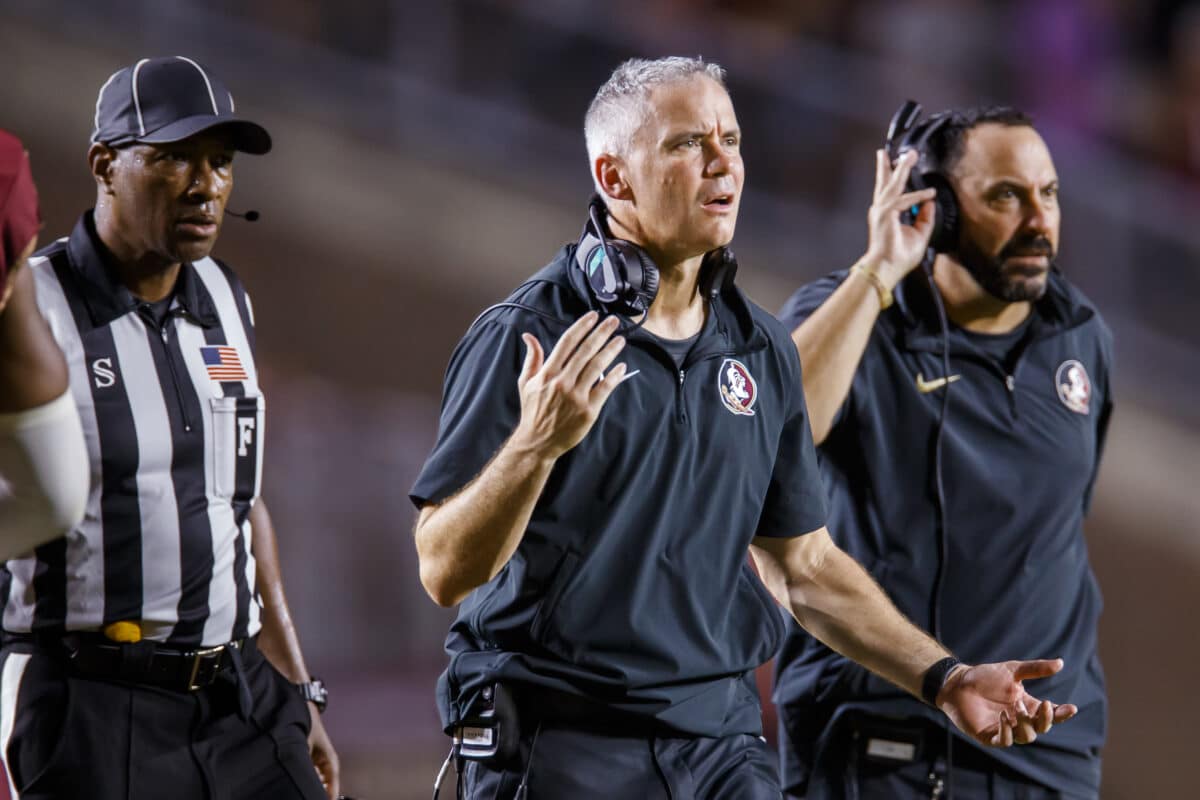
3. Mike Norvell, Florida State (ACC)

Three wins over Florida, Kent State, and an FCS team have created an illusion of recovery. The national media moved on. The hot seat conversations shifted elsewhere. Mike Norvell seems to have escaped scrutiny.

But here’s what nobody’s talking about:

Florida State hasn’t won an ACC game since November 2023. That’s a 15-game conference losing streak spanning two full seasons. The Seminoles are 0-2 in ACC play right now. The streak is alive and getting longer.

Think about that timeline:

  • 2023: 13-1, ACC Champions
  • 2024: 2-10 overall, 1-7 in conference
  • 2025: 3-2 overall, 0-2 in conference

This isn’t a one-year blip. This is a two-year organizational collapse at one of college football’s blue bloods. Norvell went from undefeated to unwatchable in less than 365 days, and the worst part? There’s no evidence that things are getting better. The wins are smoke and mirrors. The losses in conference play are the reality. And if FSU can’t figure out how to win an ACC game soon, Norvell won’t be around to see Year 4.

4. Jeff Choate, Nevada (Mountain West)

Jeff Choate is discovering that what works at Montana State may not necessarily translate to the FBS level. Nevada is 2-5, and worse, they’re not even competitive in games they should win. Choate’s “tough, physical football” approach sounds great in theory, but when you’re getting pushed around by mid-tier Mountain West teams, it’s clear something isn’t working. The Wolf Pack faithful are patient people, but patience runs out when you’re staring down a 3-9 or 4-8 season. Choate needs to show he can adapt—and fast—or he’ll be heading back to the FCS.

5. Joe Moorhead, Akron (MAC)

Joe Moorhead’s track record says he should be better than this. He’s coordinated elite offenses. He won at Fordham. But Mississippi State? Mississippi State fans still haven’t forgiven him for tanking their program. And now at Akron, he’s showing flashes of the same problem: his teams look good on paper but can’t finish. The Zips are 2-6, and here’s the frustrating part—they’re winning the stat sheet in games they lose. Yards? Check. First downs? Check. Time of possession? Check. But stats don’t win games. Scoring touchdowns and field goals wins games. And Akron can’t score when it matters. They move the ball between the 20s and then stall out in the red zone. That’s coaching. That’s execution. That’s on Moorhead. A couple of wins this season is technically an improvement over the dumpster fire Akron has been, but when you’re celebrating 2-6 as progress, your seat is scorching hot.

6. Butch Jones, Arkansas State (Sun Belt)

Butch Jones is proof that just because you failed upward once doesn’t mean you’ll get a second chance. Jones was a disaster at Tennessee, and now he’s a disaster at Arkansas State. The Red Wolves are underperforming in a Sun Belt Conference that’s supposed to be wide open, and Jones’s “championship culture” shtick is no longer resonating. Players aren’t buying in, fans aren’t showing up, and the program feels like it’s treading water. Arkansas State didn’t hire Butch Jones to be mediocre—they hired him because they thought he’d learned from his Tennessee mistakes. Turns out, he didn’t.

7. James Franklin, Penn State (Big Ten)

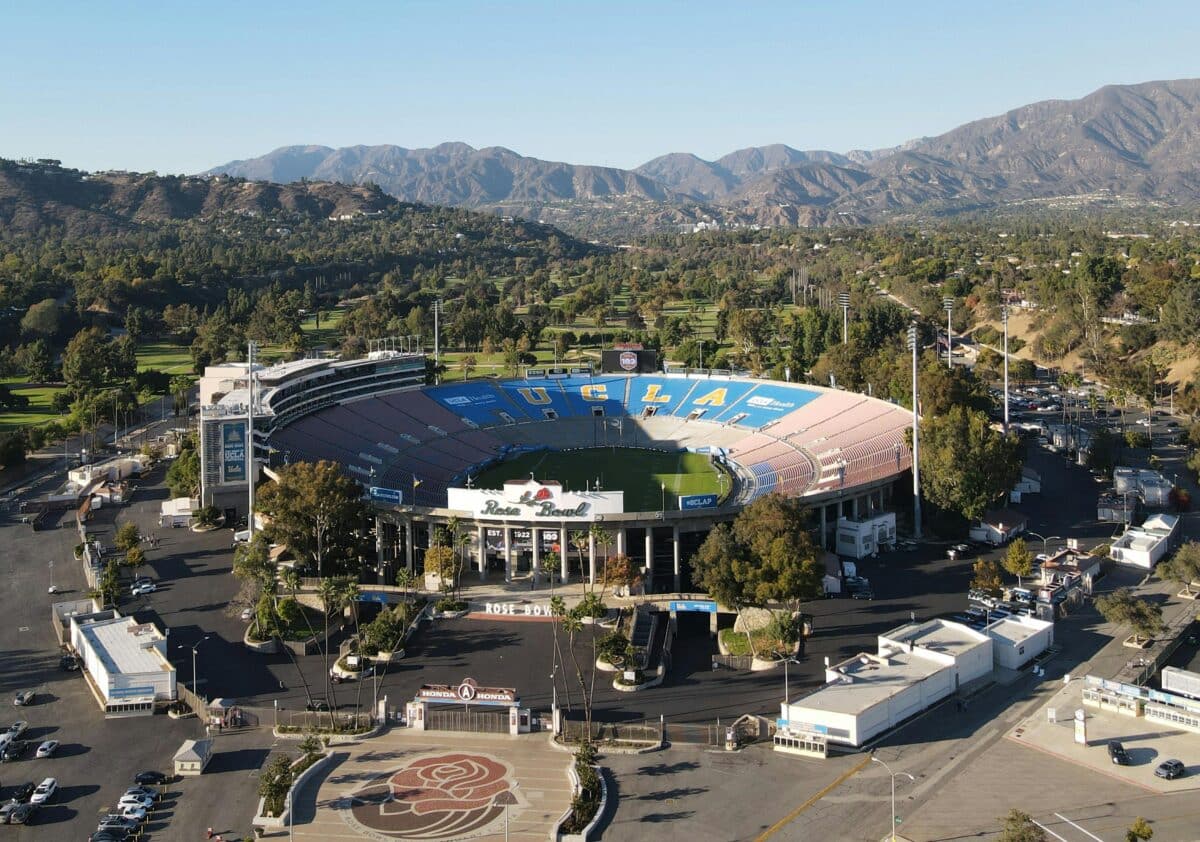
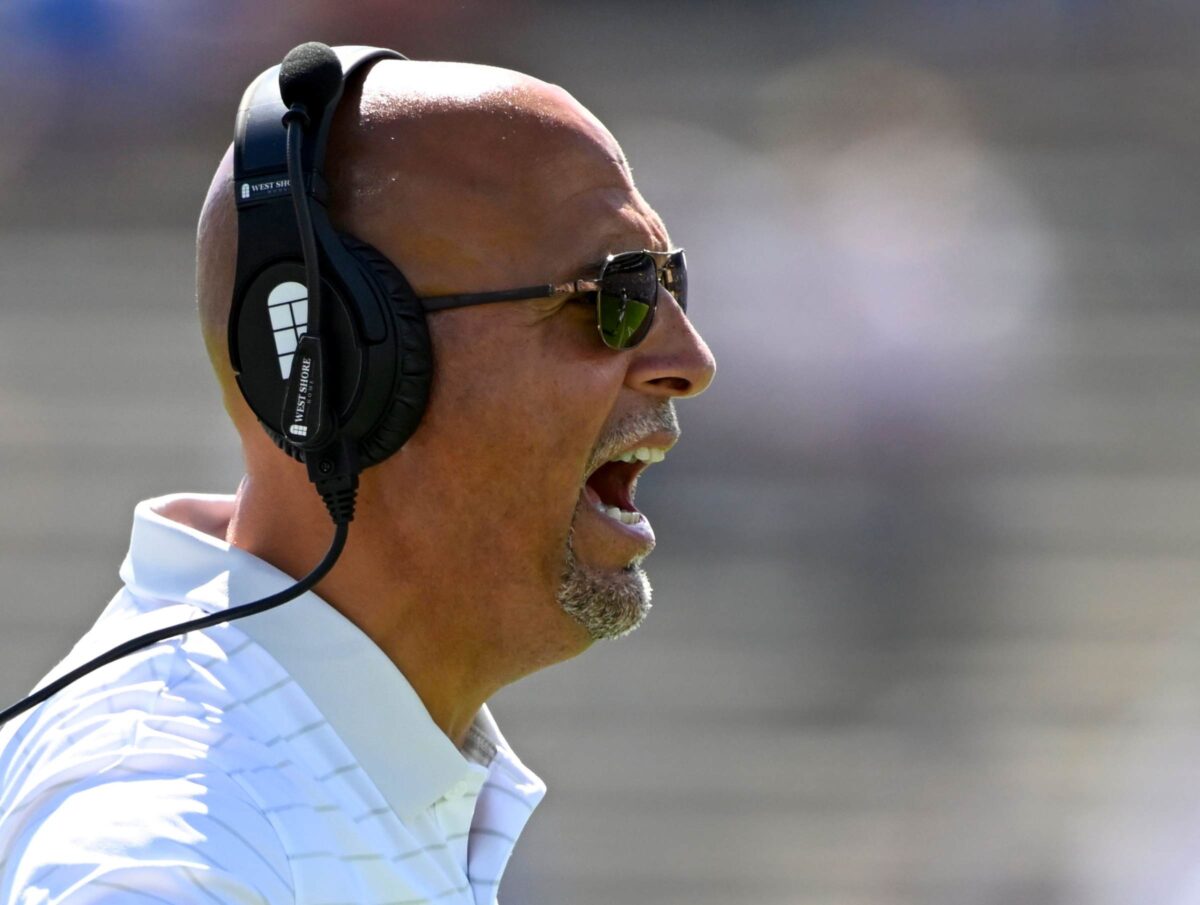
James Franklin just lost to UCLA. UCLA. A UCLA team so bad that they fired their offensive coordinator mid-season. A UCLA team that handed play-calling duties to Jerry Neuheisel—yes, Rick Neuheisel’s son—who proceeded to carve up Penn State’s defense like he was running the 2001 Miami Hurricanes offense. And Franklin? Franklin made zero adjustments. He stood on the sideline at the Rose Bowl, watching Jerry’s revamped offense shred his team while CBS cameras cut to Rick Neuheisel in the studio, celebrating his son’s victory. This wasn’t just a loss. This was the biggest upset of the season. This was a program-defining embarrassment. Penn State fans are done with “good enough.” They’re done with 10-win seasons that end with inexplicable losses to teams they should beat by 20. Franklin recruits at an elite level. He has NFL talent all over the roster. But when it matters—when his team needs him to make an adjustment, outsmart a first-time play-caller, show up in a big moment—he disappears. That’s why his seat is nuclear hot. Losing to UCLA in 2025 isn’t just bad; it’s unacceptable.

9. Derek Mason, Middle Tennessee (C-USA)

Derek Mason is a defensive coach in an era where offense wins championships, and it shows. Middle Tennessee is 2-6, and while the defense occasionally flashes, the offense is unwatchable. Mason’s problem is that he’s building a program like it’s 2005, not 2025. In today’s college football, you need to score 35+ points to win games, and the Blue Raiders can barely crack 20. Mason’s seat is hot because MTSU fans are asking a fair question: What exactly are we getting better at? If the answer is “nothing,” then it’s time to move on.

10. Scotty Walden, UTEP (C-USA)

Scotty Walden is the new kid on the block, and he’s already in trouble. UTEP hired him because of his success at Austin Peay, but the jump from FCS to FBS is massive—and Walden is drowning. The Miners are 1-7, and it’s not even close. They’re getting blown out on a weekly basis, and there’s no sign of improvement. The issue isn’t just that UTEP is losing—it’s that they look completely unprepared. Walden’s seat is hot because if you can’t show any progress in Year 1, people start wondering if you’re the right guy. And at UTEP, where expectations are low, that’s saying something.

Where does your coach stand? Check out the complete 136 FBS Coaches Hot Seat Rankings.

The Bottom Line:

These 10 coaches are in survival mode. Some will make it to bowl season. Some won’t make it to Thanksgiving. And a few might shock everyone and save their jobs with a November run that makes athletic directors rethink everything.

But here’s the reality: once you’re on a hot seat list, you’re never really off it. You’re just buying time until the next loss reignites the conversation.

Want to know who else we’re watching? Our newsletter subscribers get an exclusive breakdown of 4 under-the-radar coaches who aren’t on this list yet—but probably should be. These are the names nobody’s talking about right now, but will be by season’s end.

Subscribe here to get the full hot seat analysis delivered straight to your inbox every week.

Because in college football, the only thing hotter than the playoff race is the coaching carousel—and we’re tracking every name, every rumor, and every AD who’s about to make a very expensive decision.

No related posts found.

LOAD MORE BLOG ARTICLES

Clemson Is 1-3 And Desperate. North Carolina Can’t Score. Here’s Why Saturday’s ACC Matchup Will Be Ugly—And Why Clemson Wins Anyway

Saturday’s ACC matchup is the college football equivalent of two drowning men fighting over a life vest.

Clemson entered 2025 as a conference championship favorite. North Carolina hired Bill Belichick—the greatest NFL coach of all time—to transform their program. Four games in, both teams are disasters. Clemson is 1-3 and reeling. UNC is 2-2 and can’t score points if their lives depended on it. One of these teams will emerge victorious. The other will spiral deeper into crisis mode.

Let me break down what the numbers reveal about both teams and why this game matters more than you might think.

Clemson: The Preseason Darling That Face-Planted

The Tigers were expected to compete for ACC titles and College Football Playoff spots.

Instead, they’ve lost three straight games and look completely lost. Their offense averages 365.3 yards per game—not terrible on paper, but they’re scoring just 18 points per game in losses. That’s the problem. Moving the ball doesn’t matter if you can’t finish drives. They’re turning the ball over 1.8 times per game while forcing only 1.3 takeaways. That -0.5 turnover margin is killing them. Their losses tell the whole story: 10-17 to LSU, 21-24 to Georgia Tech, and 21-34 to Syracuse. The only game they won was an underwhelming 27-16 victory over Troy.

Here’s what’s working:

  • Passing game: 249 yards per game, 1.5 TDs
  • Defense: Allowing 362 yards per game (solid, not spectacular)
  • Yards per play: 5.7 (respectable efficiency)

Here’s what’s broken:

  • Red zone execution: Can’t punch it in when it matters
  • Turnover battle: Losing it badly
  • Rushing attack: Just 116.3 yards per game, 1 TD per game
  • Confidence: Three straight losses will do that

This is a team with talent that’s completely underperforming expectations.

North Carolina: Bill Belichick Learns College Football Is Different

The Belichick hiring was supposed to change everything.

It hasn’t. UNC’s offense is an absolute train wreck—263.5 total yards per game. That’s not “struggling.” That’s historically bad for a Power 4 conference team. They’re averaging a pathetic 4.9 yards per play. For context, that’s the kind of efficiency you’d expect from a bottom-tier Group of 5 program. Their passing game generates just 150 yards per game. Their running game isn’t much better at 113.5 yards. They score 1.3 passing touchdowns per game and 1 rushing touchdown. Do the math: that’s 2.3 total touchdowns per game.

The losses are ugly:

  • TCU demolished them 48-14
  • UCF embarrassed them 34-9
  • Their two wins came against Charlotte (20-3) and Richmond (41-6)

Translation: They beat two teams they should have destroyed, but got destroyed by anyone decent.

The defense is actually better than you’d think—allowing 344.5 yards per game, which is actually superior to Clemson’s defense. But when your offense can’t sustain drives or score points, it doesn’t matter how well your defense plays. They’re even in the turnover battle at 0.0 per game, which means they’re not creating extra possessions to compensate for their offensive ineptitude.

Belichick is learning that NFL coaching genius doesn’t automatically translate when your quarterback can’t complete passes and your skill players can’t make plays.

The Matchup: Where Clemson Should Dominate

This game comes down to one simple fact: Clemson is better everywhere.

Their offense generates 101.8 more yards per game than North Carolina’s offense. Their 5.7 yards per play crushes UNC’s 4.9. Even though both defenses are similar, Clemson’s desperation, combined with the challenge of facing UNC’s anemic offense, creates the perfect storm for them to finally get back on track. North Carolina has shown zero ability to score against competent opponents. Clemson is competent. Barely, but competent.

The key advantages for Clemson:

  • Offensive firepower: They move the ball consistently
  • Efficiency edge: 0.8 yards per play advantage
  • Desperation: They NEED this win to salvage their season
  • Matchup: UNC can’t score on anyone

Where UNC could surprise:

  • Home field advantage
  • Clemson’s turnover problems continue
  • Belichick schemes something unexpected

But let’s be honest—UNC’s offense is too broken for any of that to matter.

My Prediction: Clemson 31, North Carolina 14

Clemson wins, and it’s not close.

They’re playing a team that averages 11.5 points in losses and can barely move the football. Even with Clemson’s struggles, they have too much talent and too much desperation to lose this game. They’ll control possession, limit UNC’s already-limited scoring opportunities, and finally find the end zone enough times to win comfortably. North Carolina will score one touchdown on a broken play or short field, add a field goal or garbage-time score, and otherwise look completely overmatched.

The real story isn’t who wins this game.

The real story is what happens next. Clemson gets a much-needed confidence boost but remains far below preseason expectations. They’re not competing for championships—they’re just trying to make a bowl game at this point. For North Carolina, this loss (and it will be a loss) raises serious questions about whether Belichick can actually fix this mess. NFL coaching legends don’t mean anything in college football if you can’t recruit, develop talent, and put together a functional offensive system.

Saturday’s game is must-watch television for all the wrong reasons—two disappointing teams desperately trying not to drown.

One will survive. The other will sink deeper.

No related posts found.

LOAD MORE BLOG ARTICLES

Spotlight on the Top Five – Week 6 Coaches Hot Seat Rankings

Most people have no idea how quickly things can unravel in college football.

One day, you’re the “savior” of a storied program. Next, you’re fielding questions about your buyout clause and watching fans organize billboards calling for your resignation. The difference between job security and unemployment in this business isn’t always talent or even wins—it’s momentum. And right now, these five coaches have none.

Billy Napier is watching Florida become irrelevant in the SEC. Trent Dilfer can’t win a single road game at UAB. Joe Moorhead’s Akron teams lose close games like it’s their full-time job. Butch Jones is in year five at Arkansas State and still can’t crack .500. Sonny Cumbie’s “offensive innovation” at Louisiana Tech has produced nothing but more losses.

The clock is ticking.

Here are the five coaches who better start winning—fast—or they’ll be updating their LinkedIn profiles before Thanksgiving.

1. Billy Napier — Florida (SEC)

Napier’s seat is the hottest in college football.

Florida has a losing overall record (20-22) and an abysmal mark against key rivals (3-11 vs. Miami, Georgia, Tennessee, FSU, LSU). Fan frustration is at an all-time high due to:

  • Underperforming teams year after year
  • Poor offensive play that fails to capitalize on elite recruiting
  • Frequent penalties that cost games
  • Repeated blown opportunities in winnable contests

Administrative support is eroding as the Gators appear to be treading water in a league that demands immediate improvement.

2. Trent Dilfer — UAB (American)

Dilfer is 7-17 at UAB, with no road wins.

The fanbase is turning on both his leadership and the athletic department for the controversial hire. Performance has declined since his arrival, and the program’s competitiveness has suffered a sharp decline. The buyout remains a hurdle, but a lack of progress or response has the pressure rising each week.

3. Joe Moorhead — Akron (MAC)

Moorhead’s Zips are just 8-28 over three years.

Akron is showing incremental stat gains but not translating that into wins. The key issues:

  • Frequent close losses
  • Faltering in one-score games
  • A lack of true program momentum

The expectation is wins now, not merely competitiveness.

Patience is nearly gone.

4. Butch Jones — Arkansas State (Sun Belt)

Now in his fifth year, Jones cannot get the Red Wolves out of the bottom of the Sun Belt.

With a cumulative record of 19-31, hopes of turning around the program have largely faded. The administration is expected to take action if meaningful improvement isn’t demonstrated—that means a winning season is likely a must.

5. Sonny Cumbie — Louisiana Tech (C-USA)

Cumbie owns a 13-27 mark and has failed to show substantial progress in Ruston.

Offensive innovation has not yielded meaningful results, and buyout considerations are now being outweighed by growing donor and fan restlessness.

The next losing streak or lack of tangible on-field progress could be his last.

The Bottom Line: Win Now, Or Pack Your Office

These five coaches have no excuses.

No more “building for the future.” No more “we’re close.” No more moral victories. College football is a results business, and right now, these programs are getting zero return on their investment. Billy Napier can’t beat Florida’s rivals. Trent Dilfer can’t win on the road. Joe Moorhead can’t close games. Butch Jones can’t break .500. And Sonny Cumbie’s offense isn’t innovating anything except new ways to lose.

Want the full story? This is just the tip of the iceberg.

Every Tuesday during football season, we rank all 136 FBS coaches—and newsletter subscribers get an exclusive, deeper dive into the top 10 (this week, we threw in a bonus #11). That means inside intel on buyout clauses, potential replacements, and which athletic directors are already making phone calls behind closed doors. Subscribe to stay ahead of the chaos before it hits ESPN.

Sign up here

No related posts found.

LOAD MORE BLOG ARTICLES

From Hot Seat to Playoff Hunt: How FSU and Virginia Went From College Football’s Biggest Disasters to Undefeated Juggernauts in One Season

Friday Night Lights in Charlottesville
#8 Florida State (3-0) at Virginia (3-1)
Scott Stadium, Charlottesville, VA
Friday, September 26, 2025 – 7:00 PM ET


The Storylines

Florida State: From Disaster to Dynasty (Again)

The Seminoles have authored one of the most remarkable turnarounds in recent college football history. After a catastrophic 2-10 season in 2024 that saw them get outgained by 115.6 yards per game and score just 270.3 yards of total offense per contest, FSU has exploded onto the scene in 2025.

2025 Statistical Dominance:

  • 628.7 yards per game of total offense (+358.4 from 2024!)
  • 248.0 yards allowed per game on defense (-137.9 improvement)
  • +380.7 yard differential per game (a staggering +496.3 swing from 2024)
  • 363.0 rushing yards per game (up from an anemic 89.9 in 2024)

The Seminoles announced their arrival with a stunning 31-17 victory over #8 Alabama in the season opener, then followed with dominant blowouts of East Texas A&M (77-3) and Kent State (66-10). This is a program that has found its identity again after losing it completely in 2024.

Virginia: Tony Elliott Finally Breaks Through

Cavaliers head coach Tony Elliott entered 2025 as high as #7 on coaching hot seat rankings after years of mediocrity in Charlottesville. Four games into the season, he’s likely secured his job for years to come with an equally impressive transformation.

Virginia’s Renaissance:

  • 564.5 yards per game of total offense (up 56% from 360.9 in 2024)
  • 313.5 yards allowed per game (-23% improvement from 408.3)
  • +251.0 yard differential per game (up from -47.4 in 2024)
  • 251.5 rushing yards per game (+91% improvement from 131.9)

Elliott’s squad has posted signature wins over Coastal Carolina (48-7), William & Mary (55-16), and Stanford (48-20), with their only loss coming in a competitive 31-35 defeat to NC State.


Key Matchup Battles

Rushing Attacks vs. Run Defenses

This could be the decisive factor. Both teams have transformed their ground games into elite units:

  • FSU Rushing (363.0 ypg) vs UVA Rush Defense (100.3 ypg allowed)
  • UVA Rushing (251.5 ypg) vs FSU Rush Defense (78.3 ypg allowed)

Florida State’s rushing explosion has been the key to their offensive transformation, while Virginia has found a balanced attack that keeps defenses honest. However, FSU’s run defense has been even more dominant, allowing just 78.3 yards per game.

Quarterback Play

Florida State appears to have solved their 2024 quarterback carousel that featured struggling performances from D.J. Uiagalelei, Brock Glenn, and Luke Kromenhoek. The 2025 passing efficiency (70.7% completion rate, 265.7 ypg) suggests they’ve found their answer.

Virginia’s Anthony Colandrea has taken a massive step forward from his inconsistent 2024 (61.9% completion, 13 TD/11 INT) to become a precise, efficient leader (67.8% completion rate, 313.0 ypg).

Explosive Play Potential

Both offenses are now averaging over 7.0 yards per play (FSU: 8.9, UVA: 7.2), a massive increase from their 2024 struggles. The team that creates more explosive plays will likely control this high-scoring affair.


What’s At Stake

For Florida State

  • Undefeated season and potential playoff positioning
  • National credibility after the 2024 embarrassment
  • ACC Championship aspirations in their first year back to form
  • Momentum heading into the meat of their ACC schedule

For Virginia

  • Program validation under Tony Elliott’s leadership
  • ACC relevance for the first time in years
  • Upset potential against a ranked opponent at home
  • Continued hot seat relief for Elliott with a signature win

For Both Programs

This game represents the collision of two remarkable coaching turnarounds. Both Mike Norvell at FSU and Tony Elliott at UVA were facing serious questions about their futures just months ago. Now they’re leading two of the most improved teams in college football.


The Prediction

Florida State 38, Virginia 28

This should be an instant classic between two explosive offenses. FSU’s slightly more dominant statistical profile and their experience against elite competition (Alabama) give them the edge. Still, Virginia’s home field advantage and newfound confidence make this much closer than the rankings suggest.

Expect a track meet with over 1,100 total yards of offense between these two teams. The difference will likely come down to a few explosive plays and which team can get a crucial stop when needed.

Keys to Victory:

  • FSU: Establish the rushing attack early and force Virginia into a one-dimensional passing game
  • UVA: Use home crowd energy to create early momentum and keep pace in what should be a high-scoring affair

Both programs have gone from coaching hot seats to legitimate contenders in remarkable fashion. Tonight’s winner takes a massive step toward ACC Championship contention.

No related posts found.
VISIT OUR SHOP [COMING SOON]

LOAD MORE BLOG ARTICLES

The Mike Gundy Era Is Over (Whether Oklahoma State Admits It Or Not)

Oklahoma State’s legendary coach has become a cautionary tale about staying too long at the party

Here’s what nobody wants to say out loud.

Mike Gundy is done. Not “struggling.” Not “going through a rough patch.” Not “needing time to adjust to the new landscape.” Done.

And the numbers don’t lie—even when the narrative tries to.

The Brutal Reality Check

Let me paint you a picture of just how far Oklahoma State has fallen.

172.3 passing yards per game. That’s it. That’s the offensive explosion Mike Gundy has engineered in 2025. For context, most high school teams throw for more than that. 0.3 passing touchdowns per game. You read that correctly. In three games, Oklahoma State has thrown ONE touchdown pass. Uno. A single aerial score. 426.7 yards allowed per game. The defense—if we can even call it that—is surrendering nearly 7 yards every time an opponent snaps the ball.

But here’s the number that should make every Oklahoma State administrator’s blood run cold.

When Legends Become Liabilities

Twenty years ago, Mike Gundy was the answer to Oklahoma State’s prayers.

He turned the Cowboys into a consistent winner. Eighteen straight winning seasons. Five major bowl appearances. 102 Big 12 wins—third in conference history. He made Oklahoma State a national presence. But success has an expiration date. And Gundy’s expired somewhere between his “I’m a man! I’m 40!” rant and losing to Tulsa at home for the first time since the Clinton administration.

The statistical evidence isn’t just bad—it’s historically catastrophic.

The $15 Million Question

Here’s where things get interesting (and expensive).

Oklahoma State owes Gundy $15 million if it fires him before 2027. That’s a lot of money for a school that’s already struggling with NIL funding and watching their coach publicly complain about Oregon’s “$40 million roster.” But you know what’s more expensive than $15 million? Irrelevance. Every game Gundy stays, every embarrassing loss, every empty seat in Boone Pickens Stadium—that’s the real cost.

That’s the price of watching a proud program become a punchline.

The Oregon Excuse Factory

Before Oklahoma State got boat-raced 69-3 by Oregon, Gundy spent his press conference whining about financial disadvantages.

He suggested teams like Oregon shouldn’t play teams with fewer resources. This is where we separate legends from losers. Great coaches find ways to win with what they have. Average coaches make excuses about what they don’t have. Guess which category Gundy has fallen into? Two weeks after complaining about Oregon’s spending, Tulsa—with a NIL budget smaller than most high school booster clubs—walked into Stillwater and won.

The excuses don’t work when you’re getting out-coached by teams that can’t even spell “NIL.”

The Statistical Smoking Gun

Let’s discuss what good coaching looks like versus what Oklahoma State is currently receiving.

Elite programs adapt. Oklahoma State’s passing game has gotten worse every year. Elite programs develop talent. The Cowboys have more transfers than touchdowns. Elite programs win games they should win. Oklahoma State can’t beat Tulsa at home. Elite programs prepare for the future. Gundy hired two coordinators who hadn’t called plays since 2021. This isn’t about NIL. This isn’t about the transfer portal. This isn’t about “the changing landscape of college football.”

This is about a coach who stopped evolving while the game passed him by.

The Uncomfortable Truth

Mike Gundy gave Oklahoma State twenty incredible years.

He deserves gratitude, respect, and a place in the school’s Hall of Fame. What he doesn’t deserve is another season to damage further the program he helped build. The fans know it—they booed at halftime against Tulsa and left early. The media knows it—even OSU’s own radio broadcast called it “the worst sore we’ve seen in a long time.” The administration knows it—they restructured his contract in December with a $1 million pay cut and modified buyout terms.

Everyone knows it except the man making $6.75 million to go 1-2 against teams like Tennessee-Martin, Oregon, and Tulsa.

The Way Forward

Oklahoma State has two choices.

Pay the $15 million and start rebuilding now. Watch their program become the laughingstock of the Big 12. The first option is expensive. The second option is fatal. Great organizations make difficult decisions before they become impossible ones. They cut ties with legends before legends become liabilities. Mike Gundy was the right coach for Oklahoma State for twenty years.

But the Mike Gundy Era is over.


The numbers don’t lie.

The results speak for themselves. And sometimes, the most brutal truth is that every great story has an ending. Mike Gundy’s story at Oklahoma State was beautiful.

But it’s time to write the final chapter.

No related posts found.

LOAD MORE BLOG ARTICLES

Two Coaches, Two Seasons: How Cal vs San Diego State Became A Tale of Opposite Trajectories

Cal coach Justin Wilcox started this season at #15 on our Coaches Hot Seat Rankings. This week, he sits at #41.

Cal supporters were calling for his firing. Eight years of mediocrity had worn thin on a fanbase that remembered the Jeff Tedford glory days. The move to the ACC felt like a desperate attempt to save a program—and a coach—that had lost its way.

Three games into the 2025 season, Wilcox isn’t just off the hot seat.

He’s got Cal positioned as a legitimate ACC championship contender.

The Numbers Don’t Lie

Let’s start with what actually matters: results.

2024 Cal: 6-7 record, including a bowl loss. Mediocre on both sides of the ball.

2025 Cal: 3-0 with statement wins, including a road victory at Oregon State and a home domination of Big Ten’s Minnesota.

But here’s where it gets interesting—the statistical transformation is unprecedented.

The Defensive Revolution:

  • Total Defense: 421.4 yards allowed (2024) → 280.0 yards allowed (2025)
  • That’s 141+ fewer yards per game—one of the most dramatic single-season improvements in college football
  • Rush Defense: 109.8 yards allowed → 82.3 yards allowed (-27.5 yards, -25.0%)
  • Pass Defense: 227.6 yards allowed → 197.7 yards allowed (-29.9 yards, -13.1%)

The Offensive Evolution:

  • Scoring: 23.2 ppg → 24.3 ppg
  • Total Offense: 380.1 yards → 387.7 yards
  • Passing: 258.6 yards → 269.0 yards (+10.4 yards)

This isn’t a marginal improvement. This is a systematic transformation.

The Schedule That Changes Everything

Here’s where Wilcox caught lightning in a bottle: Cal’s ACC scheduling rotation.

Teams Cal AVOIDS in 2025: Clemson, Miami, Florida State, Georgia Tech, NC State, Pittsburgh, Syracuse, Wake Forest.

Teams Cal PLAYS in ACC action:

  • @ Boston College
  • vs Duke (ACC home opener)
  • vs North Carolina (Bill Belichick’s debut season)
  • @ Virginia Tech
  • vs Virginia
  • @ Louisville (their toughest road test)
  • @ Stanford (Big Game rivalry)
  • vs SMU (potential title game preview)

Look at that list again.

Cal avoided every single ACC powerhouse except SMU—and they get the Mustangs at home in the regular season finale.

The Hot Seat Parallel That Should Terrify Sean Lewis

While Wilcox has engineered one of the most dramatic coaching turnarounds in recent memory, his Week 4 opponent represents the opposite trajectory.

Sean Lewis at San Diego State:

  • Started at #41 on our Hot Seat Rankings
  • Now sitting at #17 and climbing
  • His “AztecFAST” offense has somehow gotten WORSE in Year 2

The Numbers:

  • 2024 SDSU: 19.5 points per game (terrible)
  • 2025 SDSU: 15.5 points per game (historically bad)
  • Point Differential: -8.3 (2024) → -3.0 (2025)*

*Only improved because their defense got dramatically better while the offense cratered

The Fan Revolt: Season ticket sales down 33%. The program handed out 4,000 free tickets to get bodies in seats for Cal’s visit. Lewis is exhibiting all the warning signs of a coach about to be fired mid-season.

Saturday’s Matchup: Cal (24.3 ppg, elite defense) vs SDSU (15.5 ppg, historically bad offense)

This should be a statement win that propels Cal toward ACC title contention.

The Path to Charlotte

Here’s the reality that nobody wants to talk about: Cal has a legitimate path to the ACC Championship Game.

The New Format: No divisions. The two teams with the best ACC conference records play for the title.

Cal’s Realistic Projection:

  • Likely Wins (5 games): Boston College, Duke, Virginia Tech, Virginia, Stanford
  • Toss-ups (2 games): North Carolina (Belichick’s first year chaos), Louisville (road)
  • Statement Game (1 game): SMU at home in finale

Path to 7-1 in ACC play: Beat the teams you should beat, split the toss-ups, and upset SMU at home.

Path to 6-2 in ACC play: Same as above, but lose one of the “sure things.”

Either record likely gets Cal to Charlotte.

The Transformation Timeline

  • January 2025: Cal supporters want Wilcox fired
  • March 2025: Wilcox at #15 on Hot Seat Rankings
  • September 2025: Cal 3-0 with the most improved defense in college football
  • December 2025: Playing for an ACC Championship?

This is what great coaching looks like when everything clicks.

Wilcox didn’t just make cosmetic changes. He fundamentally transformed the identity of his program. The defense that was giving up 421+ yards per game in 2024 is now allowing just 280 yards in 2025—that’s the kind of year-over-year improvement that typically takes multiple recruiting cycles and scheme overhauls.

The Foster Parallel

Remember our piece on DeShaun Foster’s situation at UCLA? The parallels between Foster’s final days and Sean Lewis’s current predicament at San Diego State are striking:

  • Initial optimism followed by spectacular failure
  • Gimmicky offensive systems that don’t work
  • Fan revolts and administrative pressure
  • Players transferring out

But Wilcox represents the opposite trajectory.

Sometimes a coach on the hot seat doesn’t need to be fired—he needs to be challenged. The move to the ACC, the pressure from fans, the make-or-break moment seemed to unlock something in Wilcox that eight years at Cal hadn’t revealed.

The Bottom Line

Justin Wilcox started 2025 fighting for his job.

He might end it fighting for a conference championship.

The statistical improvements aren’t flukes. The schedule isn’t luck—it’s opportunity. The wins aren’t accidents—they’re the result of systematic program transformation.

Cal’s defense has improved by 141 yards per game. Their offense is more efficient. Their quarterback play is steady. Their coaching is sharp.

Most importantly, they avoid Clemson, Miami, and the ACC’s elite tier while getting most of their challenging games at home.

Prediction: Cal goes 6-2 or 7-1 in ACC play and plays for the conference championship.

Hot Seat Status: Wilcox isn’t just off our rankings—he’s building a program that could compete at the highest level for years to come.

Sometimes, the coach everyone wants fired is exactly the coach who needed the proper support and circumstances to succeed.

Justin Wilcox just found his.

No related posts found.

LOAD MORE BLOG ARTICLES

Martin Jarmond Set DeShaun Foster Up To Fail. Now UCLA’s Athletic Director Should Be The One Looking For A New Job.

Martin Jarmond fired DeShaun Foster after 15 games, but the real problem sits one floor above the football offices.

UCLA’s athletic director created the perfect storm that destroyed Foster’s tenure before it began. The hasty hiring process, inadequate resources, and administrative dysfunction all trace back to one person: the man who pulled the trigger on Foster’s dismissal.

Here’s why Jarmond should be updating his resume.

The Timeline Tells The Real Story

Foster never had a fair chance at UCLA because Jarmond bungled the coaching transition from the very beginning.

In November 2023, Chip Kelly was openly shopping for coordinator jobs elsewhere. Instead of making a clean break, Jarmond let the situation drag on for nearly six weeks. Kelly finally left on February 2, 2024, just weeks before spring camp.

The damage was already done:

  • Recruiting class decimated
  • Transfer portal window missed
  • Staff continuity destroyed
  • Spring preparation compromised

Foster was told he wouldn’t be considered for the head coaching job if Kelly left. He took the running backs job with the Las Vegas Raiders. When Kelly bolted two weeks later, UCLA had no viable candidates willing to leave their current positions so close to spring practice.

Jarmond made calls to other coaches, but no one was going to abandon their team weeks before training camp.

The UCLA players rallied around Foster, and Jarmond gave him the job with little time to prepare. It was a desperation move masquerading as a feel-good story.

Foster Inherited An Impossible Situation

The numbers don’t lie about what Foster walked into at UCLA.

Financial constraints:

  • Reduced Big Ten revenue sharing
  • Limited NIL resources compared to Big Ten peers
  • Budget restrictions on staff expansion
  • Facility upgrades delayed or cancelled

Roster challenges:

  • Late start on transfer portal acquisitions
  • Minimal time to evaluate existing players
  • Spring practice shortened by hiring timeline
  • No established recruiting relationships

Administrative support:

  • No clear vision for Big Ten transition
  • Conflicting directives from university leadership
  • Unclear reporting structure with new chancellor

Foster went 5-10 in 15 games, but considering the circumstances, the surprise is that UCLA won five games at all.

The Zoom Call Revealed Everything

More than 100 former UCLA players held a Zoom call with Jarmond after Foster’s firing, and the conversation exposed the real problems in Westwood.

Former players told Jarmond directly:

  • He needs to listen more than he talks
  • There’s a disconnect between athletics and program traditions
  • Foster was active in recruiting local high schools
  • Previous coaches ignored alumni outreach entirely
  • The athletic department lacks a central point of contact for former players

“Martin was told he needs to listen more than he does,” one participant revealed.

The Zoom call wasn’t about defending Foster.

It was about confronting Jarmond’s broader failures as an athletic director. Former players demanded accountability from the person directly responsible for UCLA’s decline.

Chancellor Frenk Sees The Problem

The power struggle between Jarmond and Chancellor Julio Frenk reveals who really understands UCLA’s situation.

Frenk told the LA Times he intends to be “very involved in the athletic department and the football program, recognizing that success in a marquee sport like football can be financially advantageous for the school as a whole.”

This contrasts sharply with former Chancellor Gene Block, who was “notoriously removed from athletics.”

Frenk’s involvement signals recognition that Block’s hands-off approach failed. The new chancellor understands what Block and Jarmond missed: football success drives university-wide benefits.

Multiple sources confirm the coaching search committee will report directly to Frenk, not Jarmond.

When your boss creates a workaround to bypass your authority, it’s usually a sign your days are numbered.

Bill Plaschke Said The Quiet Part Out Loud

LA Times columnist Bill Plaschke published a scathing column arguing Jarmond should not be allowed to hire the next coach.

Plaschke blamed Jarmond for the “wreckage” of UCLA football, specifically calling out:

  • Mishandling Chip Kelly’s departure
  • The rushed Foster hiring process
  • Lack of adequate support for Foster
  • Creating systemic problems beyond coaching

When the city’s paper of record publishes a column calling for an athletic director’s removal from a coaching search, it reflects widespread institutional failure.

Plaschke captured what many UCLA stakeholders believe: the problem isn’t coaching, it’s leadership.

The Kelly Contract Extension Debacle

Jarmond’s pattern of poor decision-making extends beyond the Foster situation.

In December 2021, Kelly’s contract was subject to renewal clauses. His tenure had been unsuccessful, but Jarmond offered him a contract extension without a definitive decision deadline.

Kelly dragged out the process for months:

  • His representatives floated Oregon Ducks interest
  • Several qualified potential coaches took jobs elsewhere
  • UCLA missed multiple hiring cycles
  • Uncertainty damaged recruiting and staff retention

Good athletic directors create timelines and stick to them.

Jarmond allowed coaches to control processes that should have clear administrative deadlines. The Kelly extension saga revealed an athletic director unwilling or unable to make difficult decisions when necessary.

The Attendance Scandal

The LA Times recently reported that UCLA has been “blatantly and artificially boosting attendance numbers at games at the Rose Bowl.”

Reporter Ben Bolch obtained data from actual ticket scan machines and compared them to UCLA’s attendance announcements. The difference was usually several thousand, consistently inflated by the university.

This isn’t just bad optics.

It’s institutional dishonesty that reflects broader problems with Jarmond’s leadership. When athletic departments resort to fabricating attendance figures, it signals deeper issues with accountability and transparency.

UCLA Needs New Leadership

Foster’s firing was the inevitable result of Jarmond’s administrative failures, not coaching incompetence.

The evidence is overwhelming:

  • Poor timing on coaching transitions
  • Inadequate resource allocation
  • Disconnect from alumni and program traditions
  • Inflated attendance reporting
  • Loss of confidence from university leadership

Foster deserved better support. UCLA deserved better planning.

Both paid the price for organizational dysfunction that starts at the top of the athletic department.

The next coaching search faces identical systemic problems that doomed Foster unless UCLA addresses the real issue: the continued employment of Martin Jarmond as athletic director.

UCLA can fire coaches every 15 games, or they can fire the person who hires the wrong coaches for the wrong reasons at the wrong time.

The choice seems obvious to everyone except the person making the decisions.

No related posts found.

LOAD MORE BLOG ARTICLES

Why College Football Coaching Has Become a Weekly Pressure Cooker

Modern college football coaching means living under microscopic scrutiny where every decision gets analyzed and every loss creates crisis-level pressure.

Week 3 showcased how quickly hot-seat temperatures can spike when coaches face the unforgiving mathematics of fan expectations.

When Pressure Becomes Unbearable

Billy Napier’s situation at Florida illustrates how rapidly coaching pressure can escalate.

The offensive regression that created instant scrutiny:

  • Week 1: Florida scored 55 points vs LIU (looked unstoppable)
  • Week 2: Florida managed only 16 points and lost to South Florida at home
  • Post-game press conference felt like damage control
  • Reporters directly questioned whether he’s the right fit

That kind of performance swing doesn’t just lose games, it loses confidence from everyone watching.

The Heat Index Rising

Brent Pry discovered that some losses generate more pressure than others.

Virginia Tech’s 44-20 home loss to Vanderbilt created immediate comparisons to Charleston Southern’s 45-3 loss to the same team. When your ACC program’s defensive performance mirrors an FCS team’s effort, the pressure becomes suffocating.

The math doesn’t lie, and neither do angry fan forums.

Pressure Multipliers

Mike Gundy’s situation demonstrates how external factors amplify coaching pressure.

The timeline that turned trash talk into a nightmare:

  • December: Took a salary cut at Oklahoma State
  • September: Made comments about Oregon’s spending on the radio
  • Game day: Lost 69-3 after providing bulletin board material

Pre-game confidence turned into post-game humiliation, which went viral across every social media platform.

The New Normal

Today’s coaching environment creates pressure that previous generations never experienced.

The modern pressure ecosystem:

  • Social media amplifies every mistake instantly
  • Fan forums dissect every play call in real time
  • Athletic directors face constant donor pressure
  • One bad weekend transforms secure positions into hot seat situations

The microscope has never been more powerful, and the patience has never been thinner.

Want to see how all 136 FBS coaches rank under this new pressure?

Subscribe to my newsletter for detailed hot seat analysis that tracks which coaches are feeling the heat and why their situations are getting more intense each week.

No related posts found.

LOAD MORE BLOG ARTICLES

Oklahoma’s #6 Hot Seat Coach Has 12 Games To Save His Job. Michigan Is Game #2.

Here’s what everyone in college football knows but won’t say out loud.

Brent Venables is coaching for his career on Saturday. Not his season. His career. When you’re ranked #6 out of 136 coaches on the Coaches Hot Seat rankings, every game becomes a referendum on your future.

The Math Is Simple:

  • 22-17 record in three seasons at Oklahoma
  • Two losing seasons out of three
  • #6 on the hot seat rankings (danger zone territory)
  • A schedule ESPN calls the toughest in college football

Meanwhile, Sherrone Moore sits comfortably at #36 in our rankings. That’s the difference between “we’re watching” and “we’re planning your replacement.”

Here’s What Makes Saturday Fascinating:

Oklahoma went nuclear in the offseason. They brought in 21 transfer portal players, hired a new offensive coordinator, and landed John Mateer—the quarterback who led all of college football with 44 total touchdowns last season.

Michigan countered with the #1 recruit in the country, Bryce Underwood, who already proved he belongs by going 21/31 for 251 yards in his debut.

The Stakes:

For Venables, this is his best shot at an early statement win before facing eight projected top-25 opponents. Win, and the complete program overhaul looks genius. Lose, and the whispers become roars.

For Moore, this is about proving their offensive transformation can execute against proven competition.

The Truth:

Desperate coaches make dangerous opponents. When your job depends on 12 games, every snap gets magnified. Every decision gets scrutinized.

Saturday tells us whether that desperation breaks Oklahoma or brings out its best.

We Track Coaching Pressure So You See The Warning Signs First

You just read the kind of analysis that predicted coaching changes before they happened. While other publications wait for the obvious, we identify the warning signs early.

The Coaches Hot Seat newsletter delivers:

  • Weekly hot seat rankings with data-driven predictions
  • Inside analysis on coaching moves before they’re announced
  • The real financial stories behind hiring and firing decisions
  • Zero fluff, zero access journalism, zero protecting feelings

Because college football moves fast.

And the programs that survive are the ones that see what’s coming next—not the ones caught reacting to what already happened.

Get the analysis that matters before it becomes obvious to everyone else.

No related posts found.

LOAD MORE BLOG ARTICLES

9 College Football Coaches Who Just Felt Their Seats Get 10 Degrees Hotter After Week 1 (And Why the Pressure Is Only Getting Started)

College football’s coaching carousel spins fastest in September, when preseason optimism crashes into Week 1 reality and exposes the coaches who spent the offseason building excuses instead of building programs.

While ESPN debates which coaches are “on the bubble,” smart money watches the programs where fan forums have already turned toxic, ticket sales have quietly declined, and athletic directors start making those carefully worded statements about “evaluating all aspects of our program.” These aren’t the coaches having one bad game—these are the coaches whose foundational problems just got exposed under the bright lights, and no amount of spin can change what everyone saw on Saturday.

The hot seat isn’t about one loss; it’s about the pattern of problems that one loss reveals, and some coaches just proved they’re exactly who we thought they were.


#1: Sonnie Cumbie – Louisiana Tech

The Master of Bare Minimum Achievement

Sonny Cumbie has mastered the most dangerous skill in college football: being just competent enough to survive another week.

The brutal numbers tell his story:

  • 7-17 overall record across two seasons at Louisiana Tech
  • Beat FCS Southeastern Louisiana 24-0 in Week 1—exactly what any Power 5 program should do
  • Perfected coaching limbo: too successful to fire immediately, too mediocre to ever feel safe
  • Louisiana Tech fans have completely given up hope, which ironically gives him more job security

Cumbie doesn’t hold the #1 hot seat because he’s the worst coach—he holds it because he’s trapped everyone in a cycle of lowered expectations.


#2: Scott Satterfield – Cincinnati

When 69 Yards Kills Your Season

Scott Satterfield’s season died in 60 minutes when his quarterback threw for 69 yards against Nebraska.

The math that doomed him:

  • Rushing attack proved talent exists (202 yards), but questionable coordinator decisions amplified QB disaster
  • Cincinnati fans still have expectations, unlike programs where hope has died
  • 0.001 behind Cumbie in hot seat rating, but might have a higher actual firing probability
  • Disappointed expectations create way more pressure than met low expectations

One more Nebraska-level disaster, and that microscopic gap to #1 disappears entirely.


#3: Joe Moorhead – Akron

The Statistical Art of Organized Failure

After four years and 30 losses, Joe Moorhead has turned losing into a statistical art form—and his shutout loss to Wyoming proved that organized failure is still failure.

The Year 4 reality check:

  • Shutout 10-0 at home by Wyoming validated every pessimistic preseason prediction
  • Mastered showing statistical improvement while delivering results that prove the opposite
  • 8-30 overall record with enough time to build something—and a shutout loss is what he built
  • Every metric looks better except the only one that matters: points scored

Statistical improvement without wins isn’t progress—it’s just organized failure with better spreadsheets.


#4: Trent Dilfer – UAB

The 52-Point Problem

Trent Dilfer needed 52 points to beat Alabama State, and somehow that victory made his hot seat even hotter.

When offense isn’t enough:

  • 520 total yards, capable QB play, zero turnovers—the offense clearly works
  • Gave up 42 points to an FCS team that shouldn’t score 20 (defensive malpractice)
  • 7-18 record in Year 3 means zero margin for error
  • Two seasons of roster overhauls haven’t fixed the fundamental problem

In college football, being able to coach only one side of the ball isn’t a recipe for job security—it’s a recipe for updating your resume.


#5: Brent Venables – Oklahoma

Following Legends at a Program That Demands Perfection

Brent Venables crushed Illinois State 35-3, and Oklahoma fans are still holding their breath because beating FCS teams is just Tuesday at Oklahoma.

The championship standard reality:

  • Following Bob Stoops and Lincoln Riley means even dominant wins feel like pop quizzes
  • QB John Mateer looked transformed (30/37, 392 yards, 3 TD), showing offensive promise
  • 6-7 in 2024 was completely unacceptable to a fanbase that expects championships
  • Brutal SEC schedule ahead will determine if Year 3 is a breakthrough or a breakdown

Venables did what was required in Week 1, but at Oklahoma, coaches either become legends or become former coaches—there’s no middle ground.

Other Coaches We’re Watching After Week 1:


#7: Kalen Deboer – Alabama

The Fastest Hot Seat Elevation in History

Kalen DeBoer experienced the fastest hot seat elevation in college football history, jumping from #85 to #7 after one loss, proving that coaching at Alabama means living in a different reality.

The Saban shadow effect:

  • Lost 31-17 to unranked Florida State as #8-ranked team (institutional panic mode activated)
  • Offensive struggles (341 yards, only 17 points) plus defensive breakdowns in Year 2
  • Alabama doesn’t grade on curves—they grade on championships
  • Following Nick Saban means one bad game can define everything

DeBoer learned that at Alabama, losing to unranked teams isn’t championship behavior, and championship behavior is the only acceptable standard.


#15: DeShaun Foster – UCLA

When Paranoia Becomes Performance

Deshaun Foster spent eight months building walls around his UCLA program, then got embarrassed 43-10 at home by Utah, turning those walls into a spotlight on his failure.

The media strategy backfire:

  • Shut out media, tighter restrictions, eliminated distractions—the team looked completely unprepared anyway
  • Destroyed 43-10 at home (220 total yards vs Utah’s 492) in Year 2
  • Big Ten relevance demands visible improvement, not the same fundamental problems
  • Media restrictions only work if you deliver results—blowouts amplify the disaster

Foster played high-stakes poker with UCLA’s credibility and lost big, and now everyone’s watching him try to rescue himself from a disaster of his own making.


#17: Dave Aranda – Baylor

Getting Out-Coached by the More Desperate Guy

Dave Aranda’s 38-24 loss to Auburn wasn’t just disappointing—it was a masterclass in getting out-coached by a coach who was supposed to be in more trouble.

The preparation failure:

  • Allowed 307 rushing yards to a team that averaged 165.5/game
  • Managed only 64 rushing yards when Baylor averaged 178.8/game last season
  • Lost to Hugh Freeze (ranked #6 on hot seat)—more desperate coach out-prepared him
  • Year 3 expectations meant progress, not regression against the 5-7 Auburn team

When the coach ranked 28 spots higher on the hot seat makes you look unprepared on both sides of the ball, you didn’t just lose a game—you lost credibility.


#19: Spencer Danielson – Boise State

From Under the Radar to Immediate Crisis

Spencer Danielson was flying under the radar until #25 Boise State got blown out 34-7 by unranked South Florida, and suddenly everyone’s paying attention.

The complete statistical disaster:

  • 378 total yards but only 7 points (comprehensive red zone failure)
  • 3 turnovers, 27-point blowout, never competitive against G5 competition
  • Fan unrest at the end of 2024 now looks prophetic—they saw this coming
  • Moved from “under the radar” to “immediate crisis” in one game

This is precisely the pattern: fan concerns emerge first, Week 1 validates those warnings, and situations escalate quickly when ignored.


The Bottom Line

These coaches didn’t just have bad games—they revealed fundamental problems that one weekend of football exposed for everyone to see.

Some will survive September and buy themselves time to fix what’s broken. Others will discover that in college football, pattern recognition happens fast, and athletic directors are watching the same games as the fans who’ve already made up their minds.

The hot seat rankings that actually matter aren’t about who gets fired first—they’re about who proves they belong in the conversation for all the wrong reasons.

We Track Coaching Pressure So You See The Warning Signs First

You just read the kind of analysis that predicted coaching changes before they happened. While other publications wait for the obvious, we identify the warning signs early.

The Coaches Hot Seat newsletter delivers:

  • Weekly hot seat rankings with data-driven predictions
  • Inside analysis on coaching moves before they’re announced
  • The real financial stories behind hiring and firing decisions
  • Zero fluff, zero access journalism, zero protecting feelings

Because college football moves fast.

And the programs that survive are the ones that see what’s coming next—not the ones caught reacting to what already happened.

Click Here To Subscribe to Coaches Hot Seat Newsletter

Get the analysis that matters. Before it becomes obvious to everyone else.

No related posts found.

LOAD MORE BLOG ARTICLES