Brian Kelly Is Out at LSU—And the Coaching Carousel Just Got Absolutely Insane

The coaching carousel just claimed its biggest name yet.

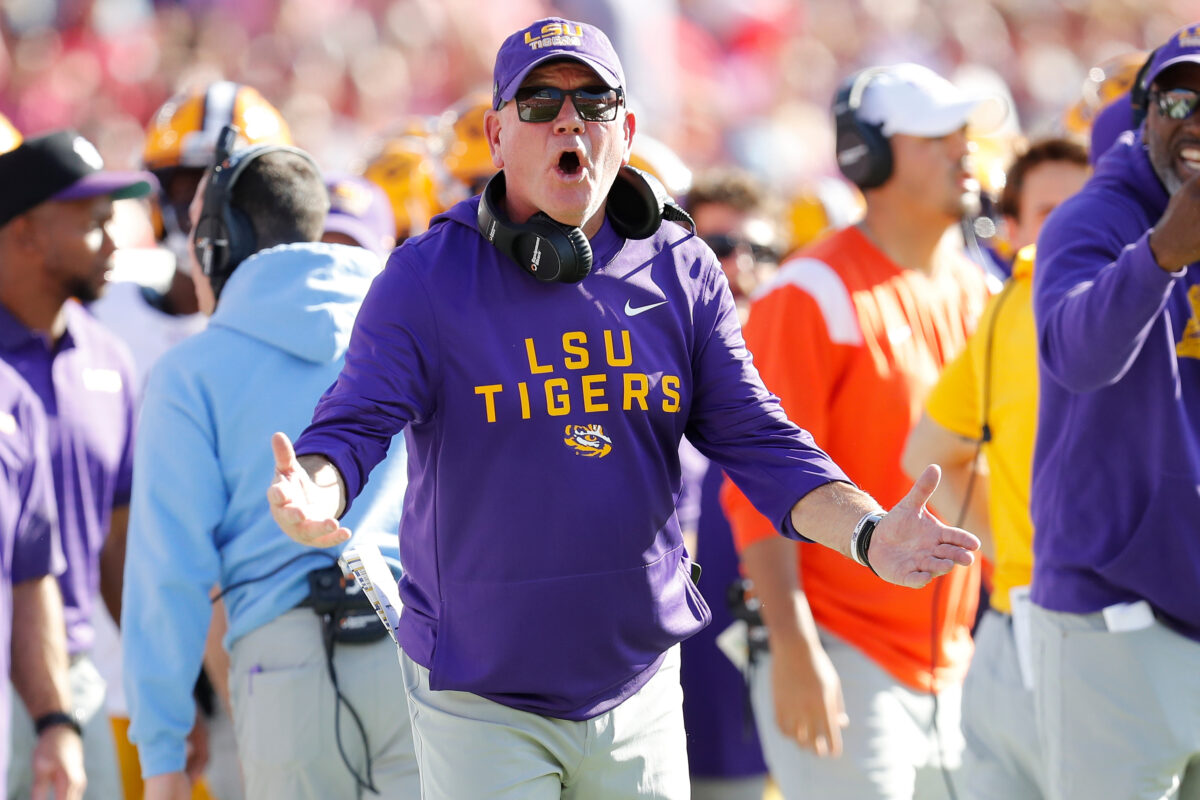
Brian Kelly is out at LSU. Fired. Done. Less than 24 hours after a humiliating 49-25 home loss to Texas A&M—after running into the locker room while students chanted “Fire Kelly,” after being forced to come back out and sing the alma mater with his players—LSU finally pulled the trigger. But this wasn’t a simple firing. This was a full-blown confrontation that spiraled out of control.

Here’s what happened.

The Dramatic Showdown That Ended It All

Sunday afternoon, according to The Athletic’s Bruce Feldman and Ralph D. Russo.

Brian Kelly and athletic director Scott Woodward meet. Woodward wants staff changes. Specifically, he wants Kelly to fire offensive coordinator Joe Sloan. LSU’s offense ranks dead last in the SEC in rushing. Something has to give. Kelly fires back. If we’re making staff changes, he says, I want to make different changes. Ones Woodward isn’t comfortable with.

Things get tense.

The conversation escalates. Kelly pushes back hard against his boss. Threats about negotiating Kelly’s $53 million buyout come up. But there’s a question: will the LSU Board of Supervisors even give Woodward the authority to do that?

By Sunday night, it’s over.

Kelly is out. A team meeting is called for 8 p.m. Associate head coach Frank Wilson is named interim head coach. Tight ends coach Alex Atkins will take over play-calling duties. And on Monday morning, LSU announces they’ve fired Sloan anyway. “When Coach Kelly arrived at LSU four years ago, we had high hopes that he would lead us to multiple SEC and national championships during his time in Baton Rouge,” Woodward said in the release. “Ultimately, the success at the level that LSU demands simply did not materialize.”

Translation: You didn’t win enough.

But here’s the thing: Kelly isn’t the only one.

This has been one of the most chaotic coaching carousel seasons in years. Jobs are opening everywhere:

  • Penn State
  • LSU
  • Florida
  • Oklahoma State
  • Arkansas
  • Virginia Tech
  • UCLA
  • Stanford

And that’s just so far.

Florida State and Oklahoma could be next. Maybe others. The competition for top candidates is going to be insane. Top-tier schools like Florida, LSU, and Penn State are in their own tier—massive resources, elite NIL, phenomenal facilities. But even they’re going to have to pay up. Big time.

Agents are salivating.

Salaries are about to get wildly inflated. And how many of these coaches will actually complete their contracts without needing to be bought out? History says not many. But here’s the question nobody wants to ask: Who are these schools actually going to hire?

And that leads to an even more uncomfortable question for programs down the ladder.

If You’re Cal (Or Nevada, Or Louisiana Tech), What Do You Do?

Let’s talk about the schools further down the food chain for a second.

If you’re Cal, what do you do? Justin Wilcox has been there for nine years. No winning seasons since 2019. The program is stuck in mediocrity. Do you fire him and jump into this insane market where every coach’s price just tripled? Do you keep investing in a guy who hasn’t delivered? If you’re Nevada, do you pay the $2.7 million buyout for Jeff Choate and try to compete with Penn State and LSU for the same candidate pool? If you’re Louisiana Tech, do you cut ties with Sonny Cumbie and hope you can find someone better in a market that’s about to be picked clean?

The reality is brutal.

The top jobs are going to snap up the top candidates. Everyone else will be fighting over the scraps. Or they’re going to have to roll the dice on assistant coaches and hope they hit on the next Cignetti. Schools like Vanderbilt, Missouri, Tulane, North Texas, Memphis, Wake Forest, and Boise State have coaches who are prime poaching targets. And they won’t have the money to keep them if the big boys come calling.

It’s a bad year to be a mid-tier program with an up-and-coming coach.

So, Who Is LSU Going to Get That’s Better Than Brian Kelly?

Which brings us back to the biggest question of all.

Think about Kelly’s résumé for a second:

  • Two Division II national championships
  • Took Cincinnati to 11-1 and a top-4 finish
  • Took Notre Dame to two national championship games
  • Ten top-25 finishes at Notre Dame, half of them in the top 10
  • Won 10 games in each of his first two seasons at LSU with top-15 finishes
  • Won 9 games last year
  • On pace for 8 wins this year

That’s not a bad coach.

That’s an excellent coach who didn’t meet LSU’s sky-high expectations. So who’s the upgrade? The names being thrown around: Lane Kiffin, Marcus Freeman, Brent Key, Eli Drinkwitz, Jon Sumrall. Are those guys sure things? Are they going to be infinitely better than Kelly?

Nobody knows.

LSU is about to spend $100 million (or more) buying out Kelly and his staff, then funding a new coaching staff, to get someone who might be better. It’s a massive gamble. Here’s the reality: You’re going to spend probably $100M buying out your previous coaching staff and funding your new one to get someone that isn’t necessarily a sure thing. It’s not like Brian Kelly was going 4-8.

And here’s the kicker.

Unless LSU is bringing back Nick Saban, Chris Petersen, or Urban Meyer from retirement, there isn’t a candidate out there who’s a sure thing. Lane Kiffin is going to make a fortune – either from Ole Miss giving him a massive raise to stay, or from one of these desperate schools throwing ridiculous money at him. Brian Kelly won’t be out of work long. Neither will James Franklin, who Penn State moved on from. They’re outstanding coaches. The problem is they weren’t great enough for programs with championship-or-bust expectations.

And that’s the new reality of college football.

What’s Next?

The carousel is spinning.

Fast. More jobs will open. More coaches will get massive paydays. More schools will regret the contracts they’re about to hand out. In about four years, a lot of these fan bases are going to be asking: “Why did we give him that contract?!”

But right now?

It’s chaos. And LSU is right in the middle of it.

Stay tuned.
No related posts found.

LOAD MORE BLOG ARTICLES

Week 8 — Coaches Hot Seat Rankings

Three coaches were fired on Sunday.

Trent Dilfer. James Franklin. Trent Bray.

Gone.

When coaches start falling in October, everyone else feels it. The phone calls start. The quiet meetings happen. The pressure that was already there gets cranked up to a whole new level.

Here are the 10 coaches under the most pressure in college football right now:


1. Billy Napier, Florida (SEC)

Billy Napier is 21-23 at Florida. One upset over Texas doesn’t erase years of mediocrity. The Gators are paying him $7 million to compete for bowl eligibility while Georgia and Alabama compete for championships.

That’s unacceptable at Florida.


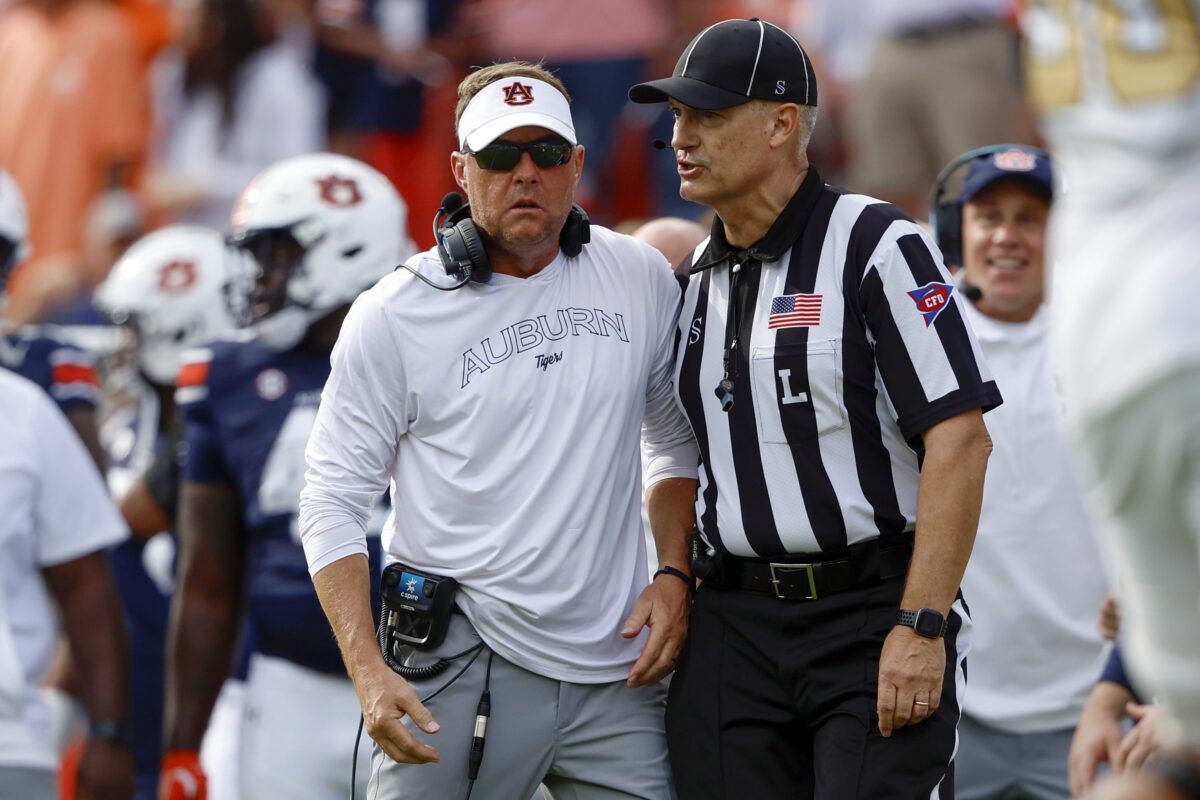
2. Hugh Freeze, Auburn (SEC)

Hugh Freeze came to Auburn with a redemption story.

A second chance after Ole Miss. Auburn gave him big money, full control, everything he needed to compete. The pressure is mounting because it’s not working.

Right now, Auburn isn’t competing.


3. Mike Norvell, Florida State (ACC)

Florida State hasn’t won an ACC game since November 2023.

Fifteen straight conference losses. Two full seasons. Zero ACC wins.

Mike Norvell went from 13-1 ACC Champions to unwatchable in less than a year.

FSU beat Florida earlier this season, and the media acted like they were “back.” They’re not—they’re 0-2 in ACC play. Norvell has had two years to figure out how to win in the ACC.

At Florida State, that’s unacceptable.


4. Jeff Choate, Nevada (Mountain West)

Jeff Choate is 4-15 at Nevada.

What worked at Montana State isn’t translating to the FBS level. Choate talks about tough, physical football, but Nevada is getting pushed around. The problem isn’t philosophy—it’s execution.

Choate is running out of time.


5. Joe Moorhead, Akron (MAC)

Joe Moorhead is 10-33 at Akron.

Elite offensive coordinator at previous stops. Winner at Fordham. But the Zips move the ball, rack up yards, then stall in the red zone—that’s coaching.

A 10-33 record over four years tells the story.


6. Luke Fickell, Wisconsin (Big Ten)

Luke Fickell was supposed to save Wisconsin football.

Wisconsin gave him everything—big money, full control, time to install his system. The defense has regressed, the offense looks disjointed, and the Big Ten is exposing every weakness. Wisconsin fans don’t want to hear about systems—they want wins.

Fickell isn’t meeting the Wisconsin standard yet.


7. Butch Jones, Arkansas State (Sun Belt)

Butch Jones failed at Tennessee.

Now he’s failing at Arkansas State. The Red Wolves are underperforming, players aren’t buying in, and fans aren’t showing up. Arkansas State thought Jones learned from his Tennessee mistakes.

The results suggest otherwise.


8. Justin Wilcox, California (ACC)

Cal got a fresh start with the move to the ACC.

New conference. New competition. New expectations. And here’s the number that matters: 8 wins.

That’s what Justin Wilcox needs to keep his job.

Look at what’s left on the schedule:

  • North Carolina
  • At Virginia Tech
  • Ranked Virginia
  • At Louisville
  • At Stanford
  • SMU

Six games—Cal needs to win five of them.

Wilcox is supposed to be a defensive guru who maximizes limited resources. But the Bears are getting manhandled by ACC competition—the defense can’t stop anyone, the offense can’t score. The math isn’t mathing.

Cal has a new chancellor—an alum, Class of ’83.

They hired Ron Rivera, NFL veteran head coach, as General Manager overseeing the football program. ESPN’s Gameday came to Berkeley last season. Everyone saw the potential. Cal has poured money and resources into this program—and they’re expecting results.

Can Willcox get the Golden Bears to 8 regular-season wins?


9. Sonny Cumbie, Louisiana Tech (C-USA)

Sonny Cumbie was supposed to bring offensive firepower to Louisiana Tech.

The Air Raid disciple. The Texas Tech coordinator everyone wanted to hire. But coordinating and head coaching are two completely different jobs—the offense has been inconsistent, the defense worse, and the program feels directionless.

Coordinator success doesn’t automatically translate to head coaching success.


10. Derek Mason, Middle Tennessee (C-USA)

Derek Mason is 4-14 at Middle Tennessee.

He’s a defensive coach in an era where offense wins championships. Mason is building a 2005 program in 2025, and Middle Tennessee can barely crack 20 points per game. MTSU fans are asking: What exactly are we getting better at?

If the answer is “nothing,” the pressure builds.


The Bottom Line:

Three coaches got fired this week—more will follow.

Athletic directors are making calls. Boosters are applying pressure. Coaches who thought they were safe realize they’re not.

Want the full picture?

Our newsletter subscribers get exclusive analysis of coaches ranked 11-25—the ones trending in the wrong direction but not quite in crisis mode yet.

Subscribe here to get all 136 FBS rankings every week.

Because pressure is a ranking—and everyone’s being measured.


Check out the complete 136 FBS Coaches Hot Seat Rankings.

No related posts found.

LOAD MORE BLOG ARTICLES

Week 7 – Coaches Hot Seat Rankings

We’re officially past the halfway point of the 2025 college football season, and the bodies are starting to pile up.

This is when the excuses run out. “We’re young” doesn’t work anymore. “We’re installing a new system” isn’t cutting it. “We just need more time” sounds like desperation. October is when college football separates the pretenders from the contenders—and more importantly, it’s when athletic directors start having quiet conversations with search firms about who might be available in December.

Some coaches entered the season on the hot seat and managed to cool things down. Others have made their situations exponentially worse. And a few—well, a few are coaching for their jobs every single Saturday, whether they want to admit it or not.

Here are the 10 coaches sitting on the hottest seats in college football right now, ranked from “you’re probably gone” to “start packing”:

1. Trent Dilfer, UAB (American)

Here’s the thing about Trent Dilfer: nobody cares that you won a Super Bowl twenty-something years ago when you’re 3-4 and sitting at the bottom of the American Athletic Conference. Dilfer came in talking a big game about “building champions” and “culture,” but UAB looks worse now than it did before he arrived. The Blazers were a scrappy, competitive program under Bill Clark. Now? They’re getting boat-raced by teams they used to beat. When you replace a beloved coach and immediately tank the program, the seat doesn’t just get hot—it becomes a five-alarm fire.

2. Billy Napier, Florida (SEC)

Billy Napier beat Texas, and some want to pretend like that changes everything. It doesn’t. Know what beating Texas gets you at Florida? Another week. Maybe two. One upset doesn’t erase two and a half years of organizational failure. Napier is still 15-18 overall. He’s still the coach who turned one of college football’s blue bloods into a mediocre SEC also-ran. The Gators are still paying him $7+ million to compete for bowl eligibility while Georgia and Alabama compete for national championships. That’s unacceptable. The Texas win was impressive—sure—but Florida fans have seen this movie before. A big win that makes everyone feel good, followed by three inexplicable losses that remind you why the seat was hot in the first place. Napier didn’t save his job. He just delayed the inevitable conversation about when, not if, Florida moves on.

3. Mike Norvell, Florida State (ACC)

Three wins over Florida, Kent State, and an FCS team have created an illusion of recovery. The national media moved on. The hot seat conversations shifted elsewhere. Mike Norvell seems to have escaped scrutiny.

But here’s what nobody’s talking about:

Florida State hasn’t won an ACC game since November 2023. That’s a 15-game conference losing streak spanning two full seasons. The Seminoles are 0-2 in ACC play right now. The streak is alive and getting longer.

Think about that timeline:

  • 2023: 13-1, ACC Champions
  • 2024: 2-10 overall, 1-7 in conference
  • 2025: 3-2 overall, 0-2 in conference

This isn’t a one-year blip. This is a two-year organizational collapse at one of college football’s blue bloods. Norvell went from undefeated to unwatchable in less than 365 days, and the worst part? There’s no evidence that things are getting better. The wins are smoke and mirrors. The losses in conference play are the reality. And if FSU can’t figure out how to win an ACC game soon, Norvell won’t be around to see Year 4.

4. Jeff Choate, Nevada (Mountain West)

Jeff Choate is discovering that what works at Montana State may not necessarily translate to the FBS level. Nevada is 2-5, and worse, they’re not even competitive in games they should win. Choate’s “tough, physical football” approach sounds great in theory, but when you’re getting pushed around by mid-tier Mountain West teams, it’s clear something isn’t working. The Wolf Pack faithful are patient people, but patience runs out when you’re staring down a 3-9 or 4-8 season. Choate needs to show he can adapt—and fast—or he’ll be heading back to the FCS.

5. Joe Moorhead, Akron (MAC)

Joe Moorhead’s track record says he should be better than this. He’s coordinated elite offenses. He won at Fordham. But Mississippi State? Mississippi State fans still haven’t forgiven him for tanking their program. And now at Akron, he’s showing flashes of the same problem: his teams look good on paper but can’t finish. The Zips are 2-6, and here’s the frustrating part—they’re winning the stat sheet in games they lose. Yards? Check. First downs? Check. Time of possession? Check. But stats don’t win games. Scoring touchdowns and field goals wins games. And Akron can’t score when it matters. They move the ball between the 20s and then stall out in the red zone. That’s coaching. That’s execution. That’s on Moorhead. A couple of wins this season is technically an improvement over the dumpster fire Akron has been, but when you’re celebrating 2-6 as progress, your seat is scorching hot.

6. Butch Jones, Arkansas State (Sun Belt)

Butch Jones is proof that just because you failed upward once doesn’t mean you’ll get a second chance. Jones was a disaster at Tennessee, and now he’s a disaster at Arkansas State. The Red Wolves are underperforming in a Sun Belt Conference that’s supposed to be wide open, and Jones’s “championship culture” shtick is no longer resonating. Players aren’t buying in, fans aren’t showing up, and the program feels like it’s treading water. Arkansas State didn’t hire Butch Jones to be mediocre—they hired him because they thought he’d learned from his Tennessee mistakes. Turns out, he didn’t.

7. James Franklin, Penn State (Big Ten)

James Franklin just lost to UCLA. UCLA. A UCLA team so bad that they fired their offensive coordinator mid-season. A UCLA team that handed play-calling duties to Jerry Neuheisel—yes, Rick Neuheisel’s son—who proceeded to carve up Penn State’s defense like he was running the 2001 Miami Hurricanes offense. And Franklin? Franklin made zero adjustments. He stood on the sideline at the Rose Bowl, watching Jerry’s revamped offense shred his team while CBS cameras cut to Rick Neuheisel in the studio, celebrating his son’s victory. This wasn’t just a loss. This was the biggest upset of the season. This was a program-defining embarrassment. Penn State fans are done with “good enough.” They’re done with 10-win seasons that end with inexplicable losses to teams they should beat by 20. Franklin recruits at an elite level. He has NFL talent all over the roster. But when it matters—when his team needs him to make an adjustment, outsmart a first-time play-caller, show up in a big moment—he disappears. That’s why his seat is nuclear hot. Losing to UCLA in 2025 isn’t just bad; it’s unacceptable.

9. Derek Mason, Middle Tennessee (C-USA)

Derek Mason is a defensive coach in an era where offense wins championships, and it shows. Middle Tennessee is 2-6, and while the defense occasionally flashes, the offense is unwatchable. Mason’s problem is that he’s building a program like it’s 2005, not 2025. In today’s college football, you need to score 35+ points to win games, and the Blue Raiders can barely crack 20. Mason’s seat is hot because MTSU fans are asking a fair question: What exactly are we getting better at? If the answer is “nothing,” then it’s time to move on.

10. Scotty Walden, UTEP (C-USA)

Scotty Walden is the new kid on the block, and he’s already in trouble. UTEP hired him because of his success at Austin Peay, but the jump from FCS to FBS is massive—and Walden is drowning. The Miners are 1-7, and it’s not even close. They’re getting blown out on a weekly basis, and there’s no sign of improvement. The issue isn’t just that UTEP is losing—it’s that they look completely unprepared. Walden’s seat is hot because if you can’t show any progress in Year 1, people start wondering if you’re the right guy. And at UTEP, where expectations are low, that’s saying something.

Where does your coach stand? Check out the complete 136 FBS Coaches Hot Seat Rankings.

The Bottom Line:

These 10 coaches are in survival mode. Some will make it to bowl season. Some won’t make it to Thanksgiving. And a few might shock everyone and save their jobs with a November run that makes athletic directors rethink everything.

But here’s the reality: once you’re on a hot seat list, you’re never really off it. You’re just buying time until the next loss reignites the conversation.

Want to know who else we’re watching? Our newsletter subscribers get an exclusive breakdown of 4 under-the-radar coaches who aren’t on this list yet—but probably should be. These are the names nobody’s talking about right now, but will be by season’s end.

Subscribe here to get the full hot seat analysis delivered straight to your inbox every week.

Because in college football, the only thing hotter than the playoff race is the coaching carousel—and we’re tracking every name, every rumor, and every AD who’s about to make a very expensive decision.

No related posts found.

LOAD MORE BLOG ARTICLES

Nevada Football 2025 Season Preview: Jeff Choate’s Critical Second Year

Jeff Choate’s honeymoon period as Nevada’s football coach is over.

After a brutal 3-10 debut season that included an embarrassing 0-7 conference record, Nevada’s second-year head coach enters 2025 with a hot seat rating of .451. This number screams one thing: urgency. With conventional wisdom granting coaches three years to show progress, 2025 becomes make-or-break time for both Choate and the Wolf Pack program.

The mathematics are simple and unforgiving. Nevada has stumbled through three consecutive 10-loss seasons, going 7-30 from 2022-24 in what represents the worst stretch in the program’s FBS history. Choate inherited a roster decimated by coaching turnover, but year two demands tangible improvement, not just moral victories and “cultural progress.”

The Painful Reality of Year One

Two stories emerged from Choate’s first season.

The encouraging narrative highlighted competitive losses to ranked opponents, SMU and Boise State, suggesting that the program had stopped the bleeding of complete blowouts that had plagued previous years. Nevada played a better brand of football but went 2-6 in one-possession games, including losses to top-10 teams.

The harsh reality revealed deeper problems:

  • Nevada’s 99 penalties tied for fifth-most nationally
  • The Wolf Pack accumulated 935 penalty yards, also fifth-most among FBS teams
  • These weren’t isolated incidents but a season-long pattern that cost Nevada winnable games against Georgia Southern, San Jose State, and Fresno State.

Even more concerning was the defensive collapse. The Wolf Pack allowed 391.5 yards per game and managed just 14 sacks—tied for the fourth fewest in the nation and the team’s least since having five in 2004.

Without a pass rush, opponents controlled games through methodical drives that Nevada’s penalty-prone defense couldn’t stop.

The Roster Revolution

Choate has essentially rebuilt Nevada from scratch.

He added 53 new players for 2025, effectively flipping roughly half the roster. This wasn’t subtle tinkering, but rather an acknowledgment that his initial roster construction had missed the mark.

“I think we made some mistakes last year because we hurried and we made it a point not to do that this year,” Choate admitted to Nevada Sports Net.

The coaching staff prioritized character and academic performance over flashy recruiting rankings:

  • They examined academic history as a predictor of work ethic
  • They evaluated family makeup and positive influences
  • They signed 30 high school players compared to just five the previous year
  • They emphasized Northern Nevada and Northern California recruits for better regional fits

This philosophical shift reflects hard-learned lessons about sustainable roster building versus quick-fix recruiting.

The Quarterback Conundrum

Brendon Lewis’s departure creates Nevada’s most pressing question mark.

Lewis accounted for 2,290 passing yards and 775 rushing yards, essentially functioning as the offense’s engine. His replacement likely comes from a group including Chubba Purdy, AJ Bianco, and newcomer Carter Jones, but none brings Lewis’s proven production.

The numbers tell a concerning story:

  • Purdy managed just 239 yards in seven games last season
  • Bianco totaled 173 yards in five appearances
  • Both showed flashes but lack the sample size to inspire confidence

The quarterback uncertainty ripples throughout an offense that already lost top receiver Jaden Smith (849 yards, 7 TDs) and leading rusher Savion Red (687 yards, 8 TDs).

Defensive Reconstruction

Nevada’s defensive makeover aims to address the unit’s glaring weaknesses.

The Wolf Pack added six transfers to the defensive backfield, addressing a secondary that consistently broke down in coverage. “That was a major priority,” Choate said of the defensive backs additions.

The coaching staff also restructured the defensive line room, combining edge rushers and interior linemen under one coordinator to improve communication and technique. This organizational change acknowledges that Nevada’s pass rush needs systematic improvement rather than personnel Band-Aids.

Special Teams Overhaul

Perhaps no area received more attention than special teams.

Nevada’s failures in crucial moments contributed to several losses throughout 2024. The Wolf Pack completely rebuilt the unit, adding multiple specialists and dedicating additional coaching resources.

This investment reflects Choate’s understanding that field position and execution in crucial moments separate winners from those who settle for moral victories.

The Schedule Reality Check

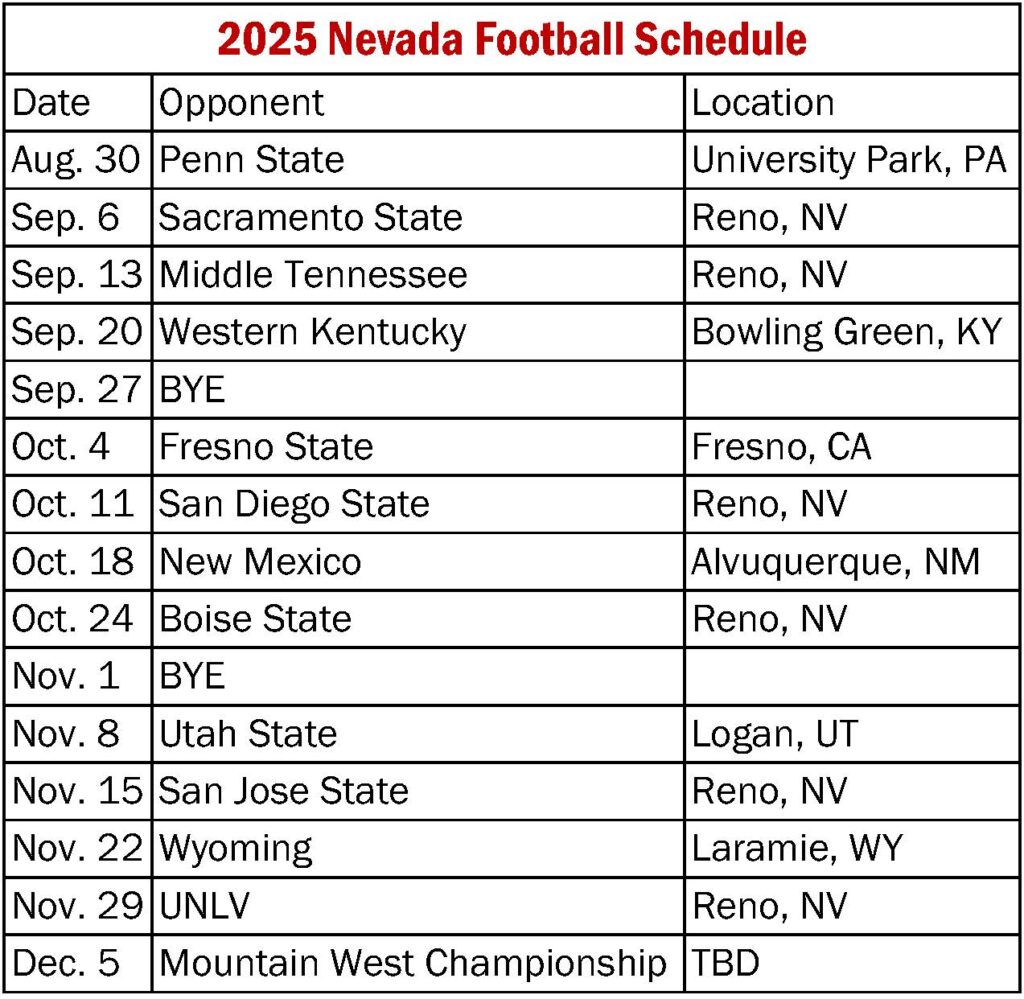
Nevada’s 2025 schedule presents both opportunities and dangers.

The season opener at Penn State represents a guaranteed loss against a College Football Playoff semifinalist. However, subsequent games offer hope:

  • Sacramento State (winnable home opener)
  • Middle Tennessee (balanced opponent at home)
  • Western Kentucky (road test but manageable)

The Mountain West slate includes crucial home games against San Diego State, Boise State, San Jose State, and UNLV. These provide chances to reverse last year’s conference shutout.

Road trips to Fresno State, New Mexico, Utah State, and Wyoming will test whether Nevada’s cultural changes translate to road toughness.

The Pressure Points

Several factors will determine whether Choate survives beyond 2025.

Conference Competitiveness: A 0-7 record in Mountain West play would likely seal Choate’s fate. The program needs at least 2-3 conference wins to demonstrate tangible progress.

Penalty Discipline: “I’ve never seen this before in my life,” Choate said about Nevada’s penalty problems during the 2024 season. If the Wolf Pack continues flagging itself out of games, it signals fundamental coaching failures.

Close Game Execution: Nevada lost multiple one-possession games through mental errors and poor situational execution. Converting just two of those losses into wins would dramatically alter perception.

Player Development: The roster overhaul only matters if newcomers improve throughout the season.

Stagnant development would indicate systemic problems beyond personnel.

What Success Looks Like

Realistic improvement for Nevada means 5-6 wins and 2-3 conference victories.

Bowl eligibility would represent a massive step forward, but even falling short while showing evident progress in penalties, defense, and close-game execution could buy Choate another year.

The hot seat rating of .451 leaves little room for moral victories. “I really feel like there’s a shift in our locker room,” Choate said, entering his second season, but shifts in locker rooms must translate to shifts in the win column.

The Deeper Reality

Choate’s situation embodies the modern paradox of college football.

Programs demand immediate results while acknowledging that sustainable success requires patience and development. Nevada’s administration and fan base understand the roster challenges Choate inherited, but hot seat ratings reflect results, not excuses.

The coach’s emphasis on character and culture suggests he’s building for long-term sustainability rather than quick fixes. However, this approach only works if accompanied by visible on-field improvement.

Too many college coaches have been fired while preaching the importance of culture and character development.

The Verdict

Jeff Choate has made logical moves to address Nevada’s 2024 weaknesses.

The roster overhaul targets specific problems, the coaching adjustments reflect honest self-assessment, and the recruiting philosophy emphasizes sustainable building rather than desperate transfers.

Whether these changes translate to wins remains uncertain:

  • Choate’s hot seat rating of .451 reflects legitimate concerns about his ability to develop competitive teams quickly enough
  • Year two will determine if he’s the right leader for Nevada’s rebuild
  • The margin for error has vanished

Choate’s process appears sound, but in college football, results matter more than methodology.

Nevada needs wins, not explanations, and 2025 will determine if Jeff Choate can deliver both.

No related posts found.
VISIT OUR SHOP [COMING SOON]

LOAD MORE BLOG ARTICLES