
Coaches Hot Seat Rankings – Week 7

We’re halfway through the 2026 season, and Oct. 17 is going to settle something.

Subscribe to have our weekly rankings sent directly to your inbox.

What a great week. Five of the Top 10 coaches didn’t play, which is the safest thing some of them have done all season.

The other five should have tried it.

Shane Beamer and Lincoln Riley won on the road, and both dropped. Mike Locksley, Jedd Fisch, and Mike Norvell lost, and none of them moved down.

Those three gave up 130 points among them. Last week’s top three also gave up 130.

I checked it twice. I’m no math major, but I can add.

1. Mike Locksley, Maryland (2-4)
Last week: No. 1

Maryland has played three Big Ten games.

UCLA 54, Maryland 3. Nebraska 48, Maryland 23. Ohio State 45, Maryland 16.

That’s 147-42, and the closest the Terrapins have come is 25 points. Nobody expected Maryland to win in Columbus, but at some point you’d like to see the other team break a sweat.

Last week the athletic director said he and Locksley are “aligned.” I’m sure they are. So is a car with three flat tires.

He stays No. 1. At this rate they ought to retire the spot.

2. Greg Schiano, Rutgers (1-4)
Last week: No. 2

Greg Schiano had the week off, and Rutgers didn’t lose. Best weekend they’ve had in a month.

The last time anyone saw the Scarlet Knights, Indiana was scoring 47 on them on homecoming. They’re 1-4 and 0-2 in the Big Ten, and a bye only gives Piscataway an extra week to look at it.

Next up is a trip to Maryland on Oct. 17, No. 2 at No. 1. Someone has to win that game. I’ve watched both teams, and I’m not sure either one knows that.

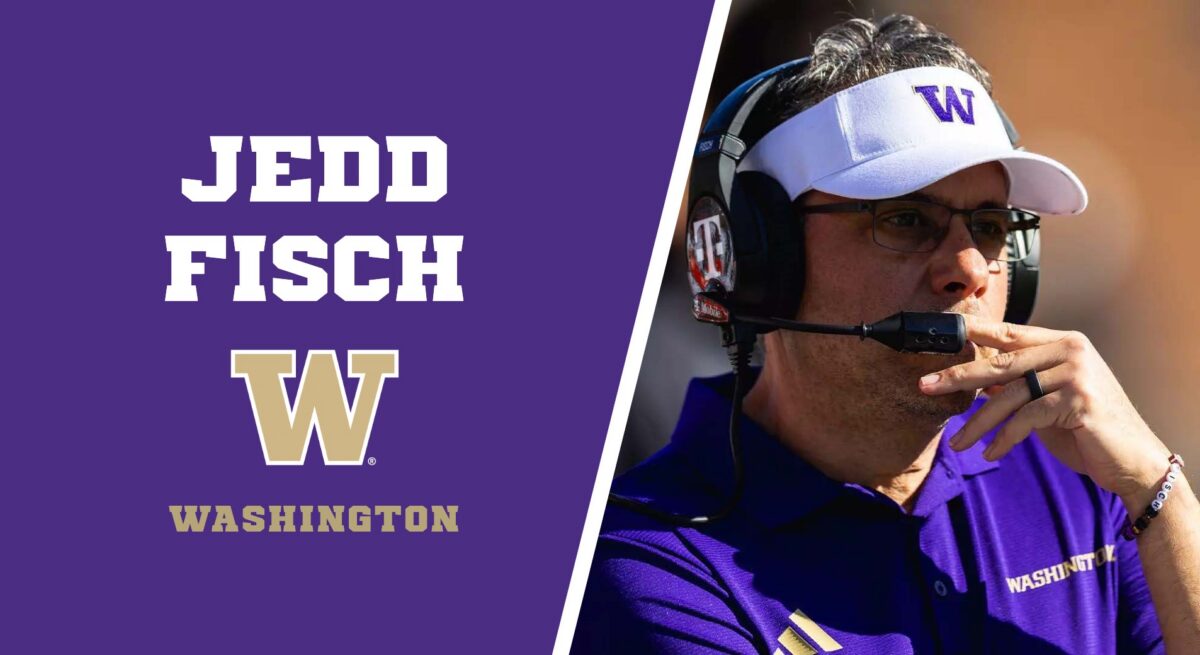
3. Jedd Fisch, Washington (3-3)
Last week: No. 6

Last week Jedd Fisch jumped 90 spots. This week he moved up three more, so at least he’s consistent.

No. 20 Iowa came to Husky Stadium Friday night and won 41-24. Washington has lost two straight and is 0-3 in the Big Ten. Fisch is 2-7 against ranked teams at Washington and 35-36 as a head coach.

Year three was supposed to be the arrival. Has anyone checked the flight status?

Only two coaches rank above him now, and they’ve won three games between them. That’s the neighborhood.

4. Mike Norvell, Florida State (3-3)
Last week: No. 4

Last week Norvell beat Virginia by 31 and stayed at No. 4. This week Louisville beat him 44-20, and he stayed at No. 4.

Win big, stay put. Get blown out, stay put. If he ties somebody, I’m calling a meeting.

The athletic director who gave him the extension was fired in September. The man who made the bet has left the table, and Norvell is still sitting there with the chips.

Nobody in Tallahassee is grading the scoreboard anymore.

5. Sonny Dykes, TCU (2-3)
Last week: No. 5

TCU had a bye, and Sonny Dykes spent it sitting by the phone.

Two Saturdays ago, 247Sports’ Scoot McGee reported Dykes could be fired as soon as that night. He wasn’t. Seven days of nothing followed, which is either good news or the longest week of his life.

This is the same Sonny Dykes who coached in the national championship game after the 2022 season, and TCU extended him in April. Now it’s 2-3, 0-2 in the Big 12, and headed to Baylor on Oct. 17.

He’s 3-1 in his last four against Dave Aranda. The bad news is that’s the good news.

6. Shane Beamer, South Carolina (3-3)
Last week: No. 3

Shane Beamer went into The Swamp and won by 19. I’d like to say I saw it coming. I’d also like a raise.

South Carolina beat No. 16 Florida 38-19, ending an eight-game SEC losing streak nobody in Columbia will miss. And that 35-34 overtime loss to Kentucky that got him booed off his own field? Kentucky beat No. 10 LSU on Saturday and is now ranked 15th, so Beamer gets to say he lost by a point to a ranked team, as long as nobody asks when it got ranked.

He drops three spots, the biggest fall in the Top 10, and he’s still 1-3 in the SEC. One road win doesn’t end last week’s buyout talk.

But it’s the first week this season South Carolina fans had to argue for him instead of against him.

7. Dave Aranda, Baylor (4-1)
Last week: No. 8

Dave Aranda moved up a spot this week, and he did it from the couch.

Baylor had a bye and is still 4-1 and 2-0 in the Big 12. He climbs because Beamer fell past him on the way down. TCU comes to Waco on Oct. 17, and Aranda has lost that game three of the last four times.

Baylor fans have heard “turning the corner” before. They’d like to see the corner.

8. Luke Fickell, Wisconsin (4-1)
Last week: No. 9

Luke Fickell moved up a spot without playing, because Lincoln Riley won at Penn State and fell right past him.

Wisconsin is 4-1 and 2-0 in the Big Ten, and everyone in Madison feels better. Fickell is still 21-22 there.

That number didn’t take the week off.

9. Lincoln Riley, USC (6-1)
Last week: No. 7

Lincoln Riley won at Penn State, 31-23, and dropped two spots. You’re welcome, Coach.

USC is 6-1, 3-1 in the Big Ten, and ranked 19th. A week ago his own student section was chanting “Fire Lincoln” during a win over Washington. During a win.

I’d hate to hear what they chant during a loss. Then again, they’re college students in Los Angeles, so they might not have noticed the score.

Winning on the road in the Big Ten cooled things off by two spots. Nobody’s forgotten the chant.

10. Deion Sanders, Colorado (2-3)
Last week: No. 10

No game for Colorado this week, so for once nobody left the playbook at the hotel bar. That’s progress.

The Buffaloes are 2-3 and 0-2 in the Big 12. Texas Tech, the team that beat them 29-7, is still unbeaten and ranked 10th, so if Coach Prime wants to say he lost to a Top 10 team, go ahead.

A bye week is the quietest a Deion Sanders team ever gets, and I’m sure he hated every minute of it.

Bubbling Under

Dave Doeren and Phil Longo hold at Nos. 11 and 12, and both lost by at least 24, so nobody can say they’re not earning it. NC State lost 38-14 at home to Wake Forest, now ranked 21st, and Sam Houston lost 35-3 at Liberty to fall to 1-4.

Joe Moorhead moves up one to No. 13 after Akron lost 25-23 at home to Eastern Michigan and fell to 1-5. Somewhere in Ypsilanti they’re still celebrating.

Ryan Silverfield moves up two after Arkansas lost 24-17 at home to then-No. 15 Tennessee. Last week it was 34-7 at Texas A&M, so it’s progress, the way a smaller dent is progress. The paper bags were aimed at the athletic director last week, and every loss moves a little more of that toward the sideline.

Matt Campbell moves up two to No. 15. Penn State moved on from a coach who won games to hire one who’d win the big ones, and Campbell is 0-3 in the Big Ten: Wisconsin, Northwestern, USC. Riley drops two for beating him, and Campbell climbs two for losing.

I didn’t design the system. I just keep the books.

Meanwhile, in Texas

Steve Sarkisian jumped 34 spots, from No. 91 to No. 57, after Oklahoma beat No. 1 Texas 27-24. No. 57 is a long way from the Top 10. Then again, ask Jedd Fisch how long that trip takes.

Mike Elko moves up five to No. 45. After Missouri beat Texas A&M 27-6, somebody asked him about fans losing faith, and he said, “Billy’s cesspool can go be Billy’s cesspool.” Billy is Billy Liucci, co-owner of TexAgs, and the cesspool is the people who buy the tickets.

The Aggies started the season ranked eighth. They’re 3-3, and they’ve scored six points in each of their last two SEC losses.

Sark lost a football game. Elko lost a football game and then picked a fight with the people paying for it.

Circle Oct. 17

Rutgers at Maryland, Schiano at Locksley. TCU at Baylor, No. 5 at No. 7.

One of the top two coaches is going to lose that day. The other one gets to find out whether a win still buys a quiet week.

I now leave you with one suggestion: Don’t bet on it.

See where all 138 coaches rank: https://coacheshotseat.com/#rank

No related posts found.

LOAD MORE BLOG ARTICLES

Washington Huskies 2025 Football Season Preview: Building on a Foundation

Washington Huskies second-year head coach Jedd Fisch is quietly assembling the pieces for what could be the Big Ten’s most intriguing turnaround story in 2025.

Washington enters their sophomore Big Ten campaign with a dramatically different outlook than the tumultuous transition year that produced a 6-7 record in 2024. With a dynamic young quarterback firmly entrenched as the starter, key playmakers returning on both sides of the ball, and a completely revamped coaching staff, the foundation for success is taking shape in Seattle.

What makes this Husky team worth watching isn’t just its potential to improve—it’s how it’s being built to address the glaring weaknesses that derailed it in 2024, specifically.

The Jekyll and Hyde Season That Set the Stage

The 2024 Huskies might have been college football’s most perplexing team.

What other program could boast a perfect 6-0 home record, including a signature win over Michigan, while simultaneously going winless (0-5) on the road? The contrast was so stark it almost defied logic:

  • At Home: 6-0 record, wins over Michigan (27-17), USC, and UCLA
  • On the Road: 0-5 record, including a lopsided 21-49 defeat to rival Oregon
  • Final Tally: 6-7 overall (4-5 Big Ten), capped by a heartbreaking 34-35 Sun Bowl loss to Louisville

This Jekyll and Hyde performance ultimately defined Year One of the Fisch era, creating a clear roadmap for what needs fixing in 2025.

The home dominance demonstrated this team’s ceiling—they have the talent to compete with established Big Ten powers.

The Demond Williams Jr. Effect

Everything changes when you find your quarterback.

The most electric development from Washington’s 2024 campaign was the late-season emergence of Demond Williams Jr., the dynamic dual-threat quarterback who has energized the entire program heading into 2025. Williams, who followed Fisch from Arizona, showed flashes of brilliance that have Husky fans dreaming big.

His Sun Bowl performance alone, over 420 total yards and five touchdowns despite an early interception, offered a tantalizing preview of what’s to come.

“Demond will be the face of Washington football moving forward next year,” Fisch stated unequivocally during the 2024 season, making it clear the program is all-in on building around Williams’ unique talents.

What makes Williams special isn’t just his arm talent or athleticism—it’s the competitive fire he brings to a program in transition:

  • Completed over 80% of his passes in both of his starts
  • Demonstrated elite escapability behind a struggling offensive line
  • Showed remarkable poise for a true freshman in hostile environments
  • Provided the offense with a dynamic dimension it previously lacked

The offense has additional firepower returning, creating a solid foundation for improvement:

  • RB Jonah Coleman (1,000+ yards, 10 TDs in 2024)
  • WR Denzel Boston (834 yards, 9 TDs)
  • An offensive line bolstered by key transfers

The Coaching Revolution

Jedd Fisch’s staff for 2025 barely resembles the one that roamed the sidelines in 2024.

Four key assistants departed after the 2024 season, triggering a cascade of changes that could dramatically reshape the Huskies’ identity. The most significant moves:

  • Ryan Walters: The former Purdue head coach takes over as defensive coordinator, bringing a proven track record of defensive transformation
  • Jimmie Dougherty: Promoted to offensive coordinator while maintaining his role as QB coach
  • Michael Switzer: Elevated to offensive line coach
  • Taylor Mays: The former USC All-American joins as safeties coach

The Walters hire deserves special attention.

“Hiring Ryan Walters allows us to continue to build on the foundation of the 2024 defense while continuing to grow and improve,” Fisch explained. “His experience in the Big Ten Conference was vital in this hire, along with having deep family ties in the Seattle area.”

Walters’ defensive coordinator resume speaks volumes about his potential impact. At Illinois, he transformed a unit ranked 97th nationally in scoring defense into the country’s #1 scoring defense (12.3 ppg) in just two seasons, precisely the dramatic improvement Washington needs.

Fixing What Was Broken

The 2024 Huskies had apparent, identifiable weaknesses that torpedoed their season.

Fisch and his staff have spent the offseason methodically addressing each one:

1. Run Defense Vulnerability

  • 2024 Problem: Allowed 161.8 rushing yards per game (4.6 per carry)
  • 2025 Solution: Added significant size (multiple 310+ pound linemen) and emphasized rotational depth to prevent late-game fading

2. Offensive Line Fragility

  • 2024 Problem: Often had just 7-9 healthy linemen, creating depth issues and pass protection breakdowns
  • 2025 Solution: Added 18 offensive linemen for spring practice, including Kansas State transfer tackle Carver Willis

3. Road Game Nightmares

  • 2024 Problem: 0-5 away from home with significant statistical dropoffs
  • 2025 Solution: Increased roster depth and physical development to better withstand travel demands

4. Discipline Issues

  • 2024 Problem: Averaged 5.8 penalties per game, often at crucial moments
  • 2025 Solution: Made discipline a cornerstone of practice philosophy

The Youth Movement

The “Dawgs After Dark” spring game provided the first public glimpse of Washington’s future.

An impressive crowd of 20,565 showed up for the nighttime showcase, where several young players flashed potential that could impact the 2025 campaign:

  • Freshman WR Raiden Vines-Bright: 8 catches, 131 yards, TD
  • Freshman safety Rylon “Batman” Dillard-Allen: Pick-six
  • Multiple redshirt freshmen are pushing for starting roles

“I love having the music playing throughout. I thought we had a really good turnout,” Fisch remarked after the event, highlighting the program’s emphasis on building enthusiasm within the fan base.

The injection of youth, combined with the established veterans, creates an intriguing mix of experience and potential.

The 2025 Gauntlet

Washington’s 2025 schedule presents a series of defining tests to determine whether this team has taken the next step.

The non-conference slate looks manageable (Colorado State, UC Davis, and the Apple Cup against Washington State), but the Big Ten portion features several potential season-makers or season-breakers:

Biggest Home Challenges:

  • Ohio State (late September)
  • Oregon (season finale)

Road Gauntlet:

  • Michigan’s Big House (mid-October)
  • Wisconsin’s Camp Randall (early November)
  • Maryland (following the Ohio State game)

A unique scheduling quirk adds another layer of difficulty—Washington faces five conference opponents coming off bye weeks, while the Huskies’ byes fall at suboptimal times (Weeks 3 and 10).

The Blueprint for Success

Four factors ultimately determine whether Washington ascends to the Big Ten hierarchy or remains stuck in transition.

1. Williams’ Evolution: His dual-threat capabilities give the offense a dynamic dimension, but consistency in the passing game will be paramount against elite defenses.

2. Walters’ Defensive Impact: Can the new coordinator work the same magic he produced at Illinois, particularly against the run?

3. Trench Warfare: Both lines struggled in 2024. The added size and depth are promising, but performance against physical Big Ten opponents will be the true measure.

4. Road Resilience Turning around the dismal 0-5 road record is essential for a winning season.

The 2025 Outlook

The math suggests Washington is headed for improvement in 2025.

Early projections place the Huskies in the 7-5 range, with a realistic span between 6-6 and 8-4 depending on how quickly the new coaching innovations take hold. This would represent tangible progress from 2024 and position the program well for further advancement in 2026.

“We still haven’t even been here a year,” Fisch reflected after the 2024 season. “To be around these kids and these guys has just been so special. They certainly have laid the foundation of a team that’s going to fight, a team that’s going to play extremely hard, a team that has an elite freshman playing quarterback, and a team that’s going to be out here battling every year to be in the playoff games.”

The ceiling for this team ultimately depends on how quickly Walters’ defensive schemes take hold and whether the offensive line can better protect Williams, allowing him to showcase his talents fully.

What’s clear is that 2025 represents more than just another season; it’s the year Washington establishes its Big Ten identity.

The Next Billion Dollar Game

College football isn’t just a sport anymore—it’s a high-stakes market where information asymmetry separates winners from losers. While the average fan sees only what happens between the sidelines, real insiders trade on the hidden dynamics reshaping programs from the inside out.

Our team has embedded with the power brokers who run this game. From the coaching carousel to NIL deals to transfer portal strategies, we’ve mapped the entire ecosystem with the kind of obsessive detail that would make a hedge fund analyst blush.

Why subscribe? Because in markets this inefficient, information creates alpha. Our subscribers knew which coaches were dead men walking months before the mainstream media caught on. They understood which programs were quietly transforming their recruiting apparatuses while competitors slept.

The smart money is already positioning for 2025. Are you?

Click below—it’s free—and join the small group of people who understand the real value of college football’s new economy.

No related posts found.

LOAD MORE BLOG ARTICLES