Is Alex Mortensen A Good Hire For UAB?

The Blazers needed a steady hand after the Trent Dilfer disaster.

They might have found one.

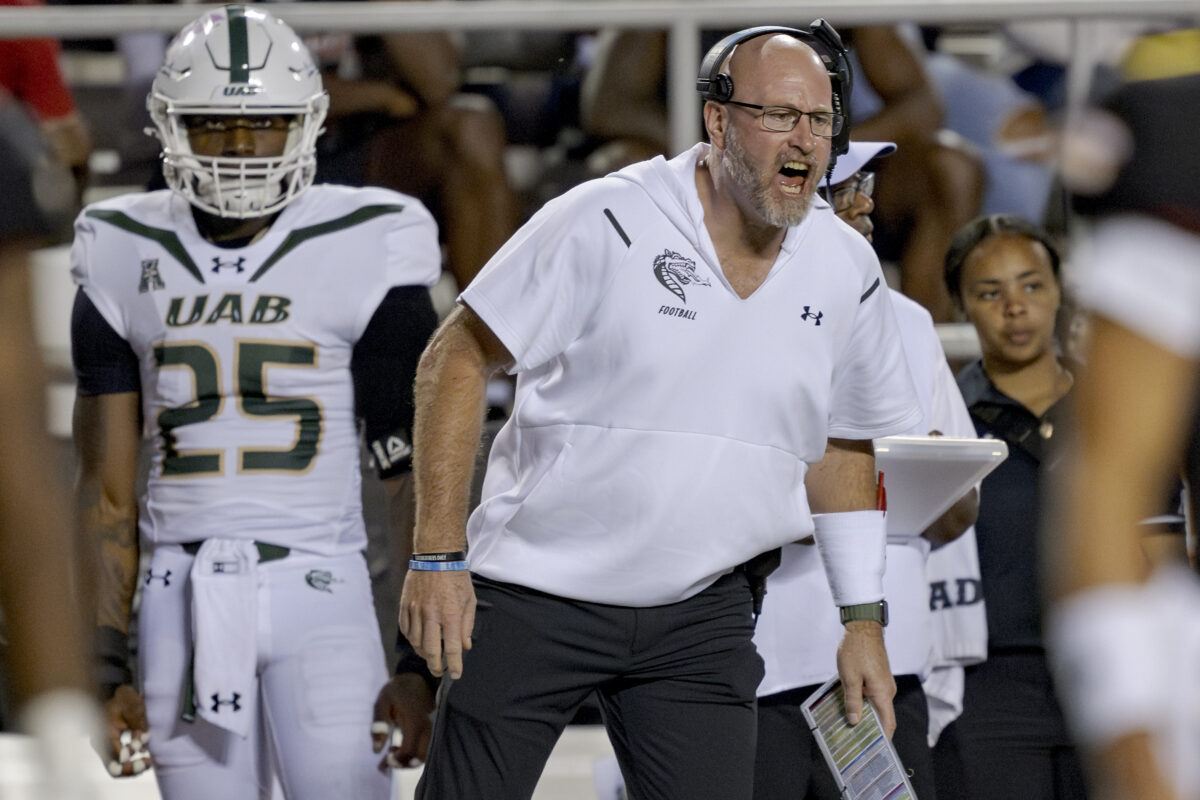
UAB named Alex Mortensen its eighth head football coach on December 5, 2025, promoting the 40-year-old offensive coordinator after a two-month interim audition that included one of the biggest upsets in program history. The hire comes after a “voluminous” search that included names like Western Michigan’s Lance Taylor, Navy OC Drew Cronic, Presbyterian’s Steve Englehart, and even Skip Holtz.

That’s the part UAB doesn’t want to say out loud. When your top target is an OC at SMU and he still passes, when multiple FCS coaches get vetted and none of them bite, the “voluminous search” starts to look less like due diligence and more like desperation.

Mortensen didn’t beat out the field. He was the last man standing.

But that doesn’t mean he’s the wrong guy. Here’s why this hire makes more sense than people think—and where the concerns are real.

The Résumé Is Legit

Mortensen isn’t some random warm body elevated because he was the last man standing.

  • Nine years on Nick Saban’s staff at Alabama (2014-2022), contributing to three national championships
  • Worked directly with six quarterbacks—Blake Sims, Jacob Coker, Jalen Hurts, Tua Tagovailoa, Mac Jones, and Heisman winner Bryce Young—three of whom are current NFL starters
  • Broyles Award nominee in his first year as UAB’s OC
  • Set UAB’s single-season school record for yards per game (450.0) in 2023
  • Averaged 415.6 yards of total offense per game across three seasons as OC
  • Son of the late Chris Mortensen, Hall of Fame NFL reporter for ESPN—the football bloodlines run deep

Before anyone rolls their eyes at “analyst-to-coordinator” pipeline coaches, remember where some of college football’s best offensive minds came from. Sarkisian. Kiffin. Daboll. Locksley. O’Brien.

Mortensen mentored under all of them.

The Interim Audition Was Extraordinary

Forget the 2-4 record as interim for a second.

Look at what actually happened.

  • Game 1 as interim: Beat No. 22 Memphis at home—one of the biggest upsets in UAB history. Backup QB Ryder Burton went 20-for-27, 251 yards, 3 TDs. The offense converted 9 of 13 on third down.
  • Final game at Tulsa: Approximately 40 UAB players sat out after a teammate stabbed two other players at the Football Operations Building hours before the previous week’s USF game. Mortensen held the team together and won at Tulsa anyway—UAB’s first road win in three years.

That Tulsa game is the one that matters most.

It had nothing to do with scheme or play-calling. It was pure leadership. Roughly half his roster refused to suit up. Two of his players were recovering from stab wounds. His program was national news for the worst possible reasons.

He won anyway.

That tells you something no résumé line ever could.

The Dilfer Context Matters

You cannot evaluate this hire without understanding the crater Mortensen is stepping into.

Trent Dilfer went 9-21 in two and a half seasons. He never won a road game. He never won two games in a row. His teams ranked last in scoring defense in the AAC. Fans stopped showing up. Recruiting cratered. And his sideline behavior—the tirades, the phone calls minutes before kickoff, the bizarre Louisville volleyball recruiting pitch on UAB’s own podcast—alienated everyone in the building.

Now Dilfer is back at Lipscomb Academy, telling the OutKick Hot Mic podcast that he never wanted the UAB job in the first place.

  • He said he felt “a burden” and was “vehemently opposed” to taking the position
  • He said AD Mark Ingram “waterboarded” him into meeting
  • He said his “job at Lipscomb is exponentially better” than UAB
  • He blamed the players’ lack of “competitive temperament” for his failures

Meanwhile, Mortensen inherited that same roster and beat a ranked team in his first game.

The Concerns Are Real

This isn’t all sunshine and optimism.

  • No prior head coaching experience. Mortensen has never been a head coach at any level before the interim tag. He was an analyst and coordinator. The jump from “calling plays” to “running a program” is massive.
  • The 4-8 record doesn’t disappear. UAB finished 4-8 in 2025—its third consecutive losing season. Mortensen went 2-4 as interim. Two of his four losses were blowouts (48-18 to USF, 42-14 to Rice).
  • UAB’s resources are limited. The program operates on one of the smallest budgets in the AAC. Dilfer’s buyout of $4 million was considered too expensive for the school just one year before they finally pulled the trigger.
  • The coaching search told the real story. Casey Woods (SMU OC) emerged as the top target. Multiple FCS and FBS coaches were vetted. Lance Taylor. Drew Cronic. Steve Englehart. Skip Holtz. None of them took the job. That’s not UAB being picky—that’s the market telling you what it thinks of this position under this AD with these resources.
  • Mark Ingram’s track record at AD. Ingram hired Dilfer over Bryant Vincent—who had gone 7-6 as interim and won a bowl game. Vincent is now rebuilding Louisiana-Monroe. UAB players begged the administration to keep Vincent. Ingram ignored them and went with the celebrity hire. That decision cost UAB three years of progress.

If Ingram is the one making this call again, that’s a legitimate reason for pause.

Why It Still Works

Here’s the counterargument—and it’s a strong one.

Mortensen knows what UAB is. He’s not walking in blind like Dilfer did. He’s been in Birmingham for three years. He knows the roster, the facilities, the recruiting territory, the budget constraints, and the culture challenges. He isn’t going to show up and publicly trash the school he works for.

He’s an offensive identity coach. UAB’s offense under Mortensen set school records. He developed Jacob Zeno into one of the most efficient QBs in the country in 2023. He has Ryder Burton – who looked like a different player in the Memphis game – as his projected starter for 2026.

He’s already recruiting. UAB signed 41 players from the transfer portal in January. He told The Banner he’s been working “basically every day, pretty long hours most days.” The early signing period and portal window don’t wait for grand introductions.

The players trust him. That’s the part you can’t manufacture. When 40 guys sit out and the remaining players still compete and win for you, that’s not scheme. That’s belief.

Our Verdict

Is Alex Mortensen a good hire for UAB?

He’s the right hire for UAB right now.

This isn’t an endorsement of his ceiling. We don’t know yet if he can recruit at a high level, manage a full staff, or navigate the NIL/portal landscape as a head coach. Those are open questions.

But here’s what we do know:

  • He’s not a celebrity experiment
  • He’s not someone who thinks he’s “too good” for the job
  • He actually wants to be there
  • He’s shown he can lead in a crisis
  • He knows the program inside and out

After three years of Trent Dilfer treating UAB like a pit stop he never wanted to make, what the Blazers need more than anything is a coach who gives a damn.

Mortensen gives a damn.

That’s the floor. And for a program digging out of a 9-21 crater with a player-stabbing-teammate incident still fresh in the rearview mirror, a high floor might be exactly what the doctor ordered.

The real question isn’t whether Mortensen is a good hire.

It’s whether Mark Ingram will give him the resources to succeed where Dilfer never could.
No related posts found.

LOAD MORE BLOG ARTICLES

Trent Dilfer Has A 7-17 Record At UAB. Here’s Why His $3.6 Million Buyout Won’t Save His Job In 2025

Here’s what nobody wants to say out loud.

Trent Dilfer is coaching for his job at UAB. And based on two years of evidence, he’s going to lose it. The numbers don’t lie. A 7-17 record. A .292 winning percentage. Zero road wins in 24 months. And a hot seat rating of 0.715 that has him ranked as the fifth most endangered coach in college football.

This isn’t speculation.

This is math.

The Problem With Hiring Names Instead Of Coaches

Athletic Director Mark Ingram made a classic mistake in 2022.

He got starstruck. Instead of promoting interim coach Bryant Vincent—who had just led UAB to a 7-6 record—Ingram chased the shiny object. He wanted the former NFL quarterback. The Super Bowl winner. The ESPN analyst with name recognition.

“I’m not hiring a high school football coach,” Ingram said at the time. “I’m hiring the number six overall pick in the NFL draft.”

Wrong.

You were hiring a high school football coach who happened to be a former NFL player. And there’s a massive difference between those two things. The irony? Bryant Vincent—the guy Ingram passed over—is now coaching Louisiana Monroe to potential bowl eligibility. Meanwhile, Dilfer’s UAB team got obliterated 32-6 by Vincent’s Warhawks to open the 2024 season.

That’s not just bad luck.

That’s institutional malpractice.

When The Numbers Tell The Whole Story

Here’s how badly things have collapsed under Dilfer.

2023 to 2024 regression:

  • Passing accuracy: 71.7% → 63.7% (catastrophic)
  • Total offense: 450 yards/game → 392.5 yards/game
  • Rushing: 161.1 yards/game → 130.9 yards/game
  • Turnovers per game: 1.7 → 2.1

You don’t accidentally get worse at this many things. This is a systematic failure. The defense was even more brutal. UAB allowed 212.9 rushing yards per game in 2024—among the worst in the country. They gave up 34.2 points per game and finished 120th in scoring defense.

Six different opponents ran for more than 190 yards against them.

That’s not a personnel problem. That’s a coaching problem.

The Hail Mary

Dilfer knows he’s drowning.

So he’s throwing everything at the wall. New defensive coordinator Steve Russ brings legitimate credibility—two Super Bowl rings and six years of NFL coaching experience. The entire defensive staff was rebuilt with over 40 years of combined NFL experience.

Through the transfer portal, 19 players left, but 13+ new faces arrived:

  • Quarterback Ryder Burton from West Virginia
  • Running back Jevon Jackson from UTEP
  • Wide receiver Kaleb Brown from Iowa

When you flip half your roster in one offseason, you’re not building a program.

You’re admitting the previous two years were a complete waste of time.

The Tone-Deaf Moments That Define Him

But here’s what shows you who Trent Dilfer is as a coach.

After a September loss, he dismissed criticism by saying, “It’s not like this is freakin’ Alabama.” Think about that for a second. Your job is to build excitement around your program. Your job is to sell hope to your fanbase. And instead, you’re publicly lowering expectations and making excuses.

Even worse? On a UAB-produced podcast, Dilfer promoted Louisville’s volleyball program—where his daughter played—over UAB’s volleyball team. At the same time, his own Athletic Director tried to defend UAB’s program on the same podcast.

That’s not just tone-deaf.

That’s sabotage.

The Math On His Future

Oddsmakers set UAB’s win total at 4.5 games for 2025.

The under is favored. Most national previews have UAB finishing 13th out of 14 teams in the AAC. The schedule includes Tennessee, Memphis, Army, and Navy—teams that will expose every weakness.

To reach bowl eligibility, UAB needs to double its 2024 win total. Based on two years of evidence, that’s not happening. The financial reality makes it worse. UAB owes Dilfer $3.6 million if they fire him after 2025, dropping to $2.4 million after the season.

But keeping a failing coach to save money is how programs die.

Why This Matters Beyond UAB

This is a cautionary tale about the modern college football hiring process.

UAB had a program with momentum. Bill Clark had built something special before health issues forced his resignation. Bowl games. Competitive teams. Hope. Dilfer inherited a functional program and systematically destroyed it through inexperience and poor judgment.

The lesson?

  • Past playing success doesn’t translate to coaching success
  • Name recognition doesn’t win games
  • When you hire someone for the wrong reasons, you get predictable results

The Verdict

Trent Dilfer will coach the 2025 season at UAB.

But he won’t coach the 2026 season. The comprehensive staff changes and roster overhaul might buy him a few extra wins. But fundamentally, nothing has changed. He’s still the same coach who has never won a road game in college football.

Athletic Director Mark Ingram will eventually have to admit his mistake.

The question isn’t if—it’s when. UAB fans deserve better than watching their program become a cautionary tale. They deserve better than a coach who publicly diminishes their school while collecting a $1.3 million salary.

The 2025 season will be Trent Dilfer’s last at UAB.

Everyone knows it, including him.

The clock isn’t just ticking. It’s about to expire.

No related posts found.

LOAD MORE BLOG ARTICLES

The Not-So-Sweet Survival Guide: College Football’s Week 11 Hot Seat Rankings

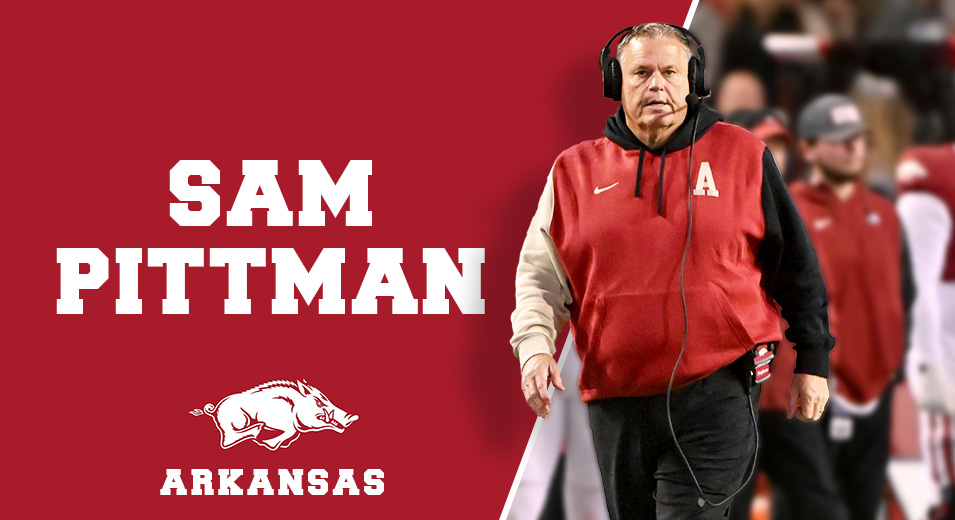
It’s college football’s week 11 – that special time of year when athletic directors start pricing golden parachutes. At Arkansas, Sam Pittman (#1) watches Jaxson Dart throw for 515 yards against his defense and wonders if those moving trucks outside his office are just passing through . In Birmingham, Trent Dilfer (#2) has mastered the art of making UAB worse than “freakin’ Alabama,” while Temple’s Stan Drayton (#3) costs more per loss than some entire Group of Five coaching staffs.

Our Hot Seat Rankings start with these 10:

1. Sam Pittman – Arkansas

In the statistical carnage that was Ole Miss’s 63-31 dismantling of Arkansas, two numbers stood out like neon signs above a desperate Vegas casino: 515 and 6. That’s how many yards and touchdowns Jaxson Dart threw without a single interception—a feat no SEC quarterback had ever managed. His favorite target, Jordan Watkins, turned eight catches into 254 yards and five touchdowns, the efficiency that makes defensive coordinators contemplate career changes.

Lane Kiffin, college football’s resident chaos merchant, couldn’t resist twisting the knife with a post-game quip about airport tarmacs—a particularly cruel jab given that Sam Pittman might soon be familiar with them himself. In the merciless accounting of college football, Pittman’s seat isn’t just hot; it is approaching nuclear fusion.

2. Trent Dilfer – UAB

On Saturday, UAB’s Kam Shanks and Jalen Kitna shattered school records in a 59-21 victory over Tulsa that felt less like a breakthrough and more like a beautiful funeral. The numbers were staggering: Shanks’s 311 all-purpose yards, Kitna’s 404 passing yards, and six touchdowns—the statistics that usually save coaching careers. But in Birmingham, where Trent Dilfer has managed to transform a conference champion into a 2-6 cautionary tale, even victory feels like defeat.

The real story isn’t in Saturday’s box score—it’s in Dilfer’s infamous “It’s not like this is freakin’ Alabama” quip, the kind of comment that makes boosters reach for their checkbooks and their phones simultaneously. In less than two years, he’s taken Bill Clark’s ascending program—six straight winning seasons, two conference titles—and performed the sort of dismantling usually reserved for failed hedge funds or terminated football programs, something Birmingham knows too well.

The irony? Dilfer’s still collecting his $1.3 million salary while his team plays like they’re working for minimum wage against real competition. In the economics of college football, that’s the kind of inefficiency that doesn’t survive long—even with Mark Ingram in charge.

3. Stan Drayton – Temple

In the economics of college football, Temple University has managed to create a case study in how not to allocate resources. They’re paying Stan Drayton—a career running backs coach—$2.5 million annually to perform heart surgery. At the same time, Florida Atlantic handed Tom Herman the same job for the price of a luxury sedan. It’s the kind of financial decision that would have kept the late Lew Katz up at night, pacing his private jet’s cabin, checkbook in hand.

The cruel mathematics of Temple’s predicament reveals itself in two numbers: 55-0, the score by which SMU dismantled the Owls on national television, and $7.5 million, the remaining cost of Drayton’s contract. In a different era, when Temple had its own version of a Wall Street activist investor in Katz, this market inefficiency would have been corrected by Monday morning. But his son Drew, now on the Board of Trustees, treats the family fortune like a conservative bond portfolio—safe, steady, and utterly useless for the kind of radical intervention Temple football requires.

The tragedy isn’t just in losing—everyone loves Drayton the Man. It’s watching a university bet its football future on a position coach while having no hedge against failure. In North Philadelphia, where campus security costs outweigh football aspirations, they’re learning that love doesn’t show up in the win column.

4. Billy Napier – Florida

For three hours and fifty-six minutes on Saturday, Billy Napier lived in an alternate universe where Florida football still mattered. His Gators, held together with duct tape and populated partly by what appeared to be a local moving crew (they’d shown up early, anticipating a blowout), had somehow matched the mighty Georgia Bulldogs punch for punch. The score sat at 20-20, and Napier could almost feel his seat temperature dropping from nuclear to merely scalding.

But Georgia, like a cat toying with an injured mouse, was merely setting up the punchline. Carson Beck had thrown three interceptions, seemingly playing to Florida’s level, until you realized it was all part of the script. In four brutal minutes, the Bulldogs engineered a 75-yard drive, snatched an interception, and scored again—transforming what could have been Napier’s career-saving upset into just another SEC cautionary tale.

The cruelest part? Those last four minutes proved that the previous 56 had been merely Georgia’s idea of performance art, a masterclass in giving false hope to the doomed.

5. Dave Aranda – Baylor

At Baylor, Dave Aranda’s job security has behaved like a volatile tech stock—swooning early, rebounding late, and keeping traders guessing. After opening 2-4 with wins against only Air Force and something called Tarleton State, Aranda’s position looked about as secure as a crypto wallet password. But in the fluid market of college football coaching, even the most bearish positions can reverse course.

Two consecutive wins against Texas Tech and Oklahoma State have performed the kind of market correction usually reserved for Federal Reserve announcements. The remaining schedule—TCU, West Virginia, Houston, and Kansas, none currently above .500—looks less like a gauntlet and more like a carefully curated path to bowl eligibility. “Six wins and he’s back,” whispered one industry insider, with the kind of certainty usually reserved for insider trading tips.

The irony? Aranda, the defensive genius who once commanded premium value in the coaching marketplace, finds his future tied to the most basic of metrics: win six games or clean out your office. In Waco, where faith and football intersect with ten-figure endowments, salvation comes from a .500 record.

6. Sonny Cumbie – Louisiana Tech

In Huntsville, Texas, on a Tuesday night that felt more like a Samuel Beckett play than a football game, Sonny Cumbie’s Louisiana Tech team managed to lose 9-3 while winning almost every statistical category that matters. They outgained Sam Houston 312-268, held a rushing attack that averaged 200 yards per game to just 105, and forced two turnovers. By any rational measure, they should have won. But college football, like tragedy, follows its peculiar logic.

The box score reads like a hedge fund’s risk assessment report gone wrong: four turnovers, two turnovers on downs, and three points to show for it all. Twice, the Bulldogs penetrated within the 5-yard line in the fourth quarter alone, finding new and creative ways to self-destruct each time. This kind of performance makes athletic directors update their coaching search firms’ contact information.

The cruel irony? Cumbie’s defense played well enough to win a conference championship game. Instead, they watched their offense turn the red zone into a haunted house, fumbling away what little hope remained of salvaging their season. At 3-5, with Jacksonville State looming, Cumbie finds himself selling the one commodity no one in college football wants to buy: moral victories.

7. Joe Moorhead – Akron

Joe Moorhead’s return to Akron had all the elements of a classic homecoming story—the prodigal coordinator returns, older and wiser, ready to transform his former program. It was the kind of narrative Hollywood makes movies about. Instead, it’s become a documentary about entropy: two straight 2-10 seasons, with 2023 following the same inexorable path toward dysfunction.

Saturday’s 41-30 loss to Buffalo reads like a physics problem where all the equations work backwards. The Zips outgained Buffalo 452-390, dominated through the air 378-210, and won the third-down battle 43% to 23%. Ben Finley threw for 378 yards and four touchdowns—numbers that in any rational universe translate to victory. But Akron, like a time traveler who can only arrive after the critical moments have passed, spotted Buffalo a 38-7 lead before remembering how to play football.

The cruel irony? Moorhead was supposed to be the sure thing—the experienced head coach, the familiar face, the proven winner. Instead, he’s become living proof that in college football, like quantum mechanics, observation changes the outcome. In Akron, where they’ve spent decades trying to solve the equation of relevance, they’re learning that even the smartest professors sometimes fail the final exam.

8. Mark Stoops – Kentucky

Mark Stoops has achieved something that should be impossible in the physical universe of college football: becoming Kentucky’s all-time winningest coach (73 victories) while simultaneously watching his support evaporate like bourbon at a tailgate. It’s the kind of contradiction that makes quantum physicists scratch their heads—how can someone be the most successful coach in school history and a source of fan rebellion?

The 2024 season opened like a Southern Gothic novel—high expectations, veteran talent, and a schedule that read like a list of ancient curses. By week two against South Carolina, the plot had turned dark: the offensive line collapsed like a condemned building, and fans who’d once praised Stoops’ program building started treating his flirtation with Texas A&M like a betrayal in a Faulkner story.

The cruel irony? In a state where basketball championships are measured like bourbon vintages, Stoops made football matter. He turned seven straight bowl games into an expectation rather than a miracle. As whispers suggest he might walk away, Kentucky faces a terrifying question: What if their greatest football coach ever was also their last chance at sustained relevance? In Lexington, where basketball season can’t start soon enough, they learn that success and satisfaction rarely arrive in the same bottle.

9. Hugh Freeze – Auburn

In the Gothic horror story that is Auburn football, Hugh Freeze has managed to accomplish something previously thought impossible: making Jordan-Hare Stadium about as intimidating as a petting zoo. The latest chapter? A 17-7 loss to Vanderbilt that read less like a football game and more like an exorcism gone wrong—except the demons won.

The numbers tell a story of decay that would make Edgar Allan Poe proud: 4-10 against SEC opponents since his arrival, an offense that treats the end zone like it’s radioactive, and a fan base discovering that their traditional autumn rituals of victory have been replaced by something far more sinister: mediocrity. They’re not just losing; they’re losing to Vanderbilt at home, the kind of plot twist that makes Stephen King seem unimaginative.

The cruel irony? After enduring what they called “the worst coach in SEC history, ” Auburn hired Freeze to be their savior.” Now, as Freeze watches his quarterback Payton Thorne perform weekly reenactments of college football’s greatest disasters while Jarquez Hunter stands idle on the sideline, they learn a painful lesson: sometimes the cure can feel worse than the disease. On the Plains, where “War Eagle” once struck fear into visitors, they discover that not all resurrection stories have happy endings.

10. Lincoln Riley – USC

Lincoln Riley’s USC experiment has begun to resemble a Silicon Valley startup in freefall—the kind where the CEO starts banning journalists, restricting information flow, and contemplating whether to return the deposit on the party clown. The numbers tell the story of this implosion: 5-11 in their last 16 games, a stark reversal from the 17-3 start that had USC boosters dreaming of their next Pete Carroll.

Saturday’s 26-21 loss to Washington felt less like a football game and more like a hedge fund’s last trading day. Miller Moss threw three interceptions, each one driving down USC’s stock price a little further. The remaining schedule—Nebraska, UCLA, Notre Dame—looms like a series of margin calls. A bowl game, once considered a foregone conclusion in the Riley era, now feels about as sure as a cryptocurrency recovery.

The tragedy isn’t just in the losing—it’s in watching Riley transform from offensive genius to besieged executive. We expect his next move to come straight from his Oklahoma playbook: painting the windows black in Heritage Hall and the McKay Center. In L.A., where style points count double, Riley’s program has become something worse than unsuccessful: It’s become uncool.

Check out our complete list here. Share your thoughts here.

No related posts found.

LOAD MORE BLOG ARTICLES

College Football’s Hot Seat Rankings: Your Voice Matters

The 2024 college football season has been a rollercoaster of expectations and disappointments, and no one knows this better than the fans. As we enter the final stretch, it’s time for you to weigh in on which coaches are feeling the heat and which ones might need to update their résumés. Your voice matters – cast your vote here.

Why Your Vote Matters Now

The landscape of college football has shifted dramatically this season. We’re seeing traditional powerhouses struggle, unexpected collapses, and fan bases growing increasingly restless. From Happy Valley to Los Angeles, from The Plains to The Hill, passionate fans question whether their programs are heading in the right direction.

The Notable Names:

James Franklin, Penn State

The numbers tell a story that Penn State fans know all too well: 13-26 against AP Top 25 teams, 3-18 against Top 10 teams, and a painful 1-10 record against Ohio State. The same old story played out in a year when the playoffs seemed within reach. Is being “good” good enough for Happy Valley?

Lincoln Riley, USC

Making $10 million per year comes with expectations, and at 4-5 (2-5 in conference play), Riley’s Trojans are in danger of missing a bowl game entirely. The shine from that 11-3 first season is fading fast, and the remaining games against Nebraska, UCLA, and Notre Dame could define his future.

Hugh Freeze, Auburn

When Vanderbilt becomes your latest disappointment in a season full of them, questions arise. Freeze’s Tigers are matching the identical SEC records that got his predecessor fired, and while recruiting rankings look promising, the on-field product tells a different story. That “snake oil salesman charm” might need more than future promises to satisfy the Auburn faithful.

Sam Pittman, Arkansas

Giving up 63 points at home to Ole Miss might be the final straw. When your head coach admits you got “out-played, out-coached, and out-physicaled,” it’s hard to maintain confidence. The question isn’t whether Pittman can get you to 6-6; it’s whether that’s enough for a program with Arkansas’s history.

Other Hot Seats to Watch

  • Ryan Walters (Purdue): A potential 1-11 season looms
  • Mike Norvell (Florida State): Last year’s ACC title might buy time, but 2024’s 1-7 conference record burns
  • Brent Pry (Virginia Tech): That 1-11 record in one-score games isn’t winning any favor
  • Kevin Wilson (Tulsa): Losing 45-7 at halftime to a previously 1-6 UAB team speaks volumes
  • Sonny Cumbie (Louisiana Tech): Three straight losing seasons could spell doom

Make Your Voice Heard

Now it’s your turn. Whether you’re a frustrated fan looking to send a message or a satisfied supporter wanting to back your coach, your vote matters. The temperature on these hot seats changes weekly, and your input helps shape the conversation about the future of these programs.

Cast your vote now and let these coaches know exactly where they stand. After all, in college football, the court of public opinion can be just as impactful as the scoreboard.

No related posts found.
VISIT OUR SHOP [COMING SOON]

LOAD MORE BLOG ARTICLES

Trent Dilfer’s UAB Tenure: A Program-Killer in the Making?

Is this a program-killer in the making?

Picture this: It’s a crisp autumn Saturday in Birmingham, Alabama. The stands at Protective Stadium are sparse, and the energy is subdued. On the sideline, a man with a Super Bowl ring on his finger and a deer-in-headlights look in his eyes watches as his team gets steamrolled.

This isn’t some fever dream. This is the reality of UAB football under Trent Dilfer.

Now, I’ve seen my fair share of coaching hot seats. But Dilfer’s? It’s not just hot. It’s supernova hot. We’re talking “center of the sun” hot. And here’s the kicker: It’s all happening faster than you can say “freakin’ Alabama.”

The Unlikely Experiment Gone Wrong

In the high-stakes world of college football, UAB decided to roll the dice on a former NFL quarterback turned high school coach with zero college experience. It was the kind of move that either ends up in the genius column or… well, let’s say it’s currently trending towards the “What Were They Thinking?” file.

As Joseph Goodman, the lead sports columnist for the Alabama Media Group puts it: “There was always a chance at UAB with Trent Dilfer that things could go horribly wrong in a hurry. Well, we’re here after six weeks of his second season on the Southside.”

The Numbers Don’t Lie

If football is a game of inches, then Dilfer’s UAB tenure is currently measuring in negative yardage. Let’s break it down:

  • 2023 season: 4-8 record
  • 2024 season (so far): 1-5 overall, 0-2 in AAC
  • Signature win: A 41-3 victory over… Alcorn State (no offense to the Braves)
  • Signature loss: A 71-20 demolition by Tulane that was 57-6 after three quarters

Goodman is blunt in his assessment: “If not for UMass, UAB might be the worst team in the entire Football Bowl Subdivision.”

Dilfer’s Dilemma: Words and Actions

But here’s the thing about football – it’s not just about the numbers. It’s about the intangibles. The energy. The momentum. The belief. And that’s where Dilfer’s tenure gets even more puzzling.

After a crushing loss to Navy, Dilfer casually remarked, “It’s not like this is freakin’ Alabama.” In a state where football isn’t just a sport but a religion, in a program perpetually fighting for respect, those seven words were like a tactical nuke to team morale.

It’s the kind of comment that makes you wonder: Does Dilfer understand where he is? Does he grasp the history, struggle, and passion that define UAB football?

Goodman hits the nail on the head: “Dilfer’s blind loyalty is making things difficult for the Blazers.” He’s referring to Dilfer’s decision to hire a high school buddy as defensive coordinator instead of bringing in experienced college talent. It’s a move that screams, “I don’t know what I don’t know.”

The $4.1 Million Question

Now, here’s where it gets really interesting. Dilfer’s contract is a fascinating study in risk management – or lack thereof. His base salary? A cool $1.2 million per year. But the real kicker is the buyout clause. If UAB decides to cut bait after December 1, 2024, they’re on the hook for $4.1 million.

In the economics of college football, where athletic departments often operate on razor-thin margins, that’s not just a number. It’s a potential program-killer.

And for UAB, the term “program-killer” isn’t just hyperbole. It’s a very real specter of the past.

The Phoenix That Might Fall Again

Here’s the thing about UAB football: it’s not just a program. It’s a survivor—a phoenix. In 2014, the University of Alabama System Board of Trustees pulled the plug on UAB football, citing financial concerns. But the city of Birmingham and the UAB faithful fought back. They raised millions. And in 2017, UAB football rose from the dead.

Under coach Bill Clark, the resurrected Blazers didn’t just survive. They thrived. Conference titles. Bowl games. Winning seasons stacked on winning seasons.

And now? Dilfer’s struggles aren’t just disappointing. They’re existential.

Goodman voices a fear becoming all too real: “My biggest fear… is that the Board of Trustees is just going to kill the football team again.”

In this context, Dilfer’s failures aren’t just about wins and losses. They’re potentially jeopardizing a program that fought tooth and nail for its right to exist.

The Road Ahead: Survival at Stake

At this crossroads, the question isn’t just whether Dilfer can turn things around. It’s whether any competent coach will ever get the chance to and at what cost.

Will Dilfer pull off a miracle? Can he channel the spirit of Bill Clark, the coach who not only won games but also won the existential battle for UAB football’s very soul?

Or will this experiment go down as the costliest mistake in UAB football history – one that could potentially lead to another existential crisis for the program?

One thing’s for sure: The heat is on in the pressure cooker of college football. And for Trent Dilfer, the clock isn’t just ticking. It’s a time bomb.

Goodman leaves us with a sobering thought: “It’s now on President Watts to fix UAB football, and the good doctor might need to bring his scalpel for the job.”

In Birmingham, they’re not just watching a football season unfold. They’re witnessing a $4.1 million question play out in real time. And for UAB fans, alumni, and administrators, the answer can’t come soon enough. Because this time, it’s not just about winning or losing. It’s about surviving. Again.

And Trent Dilfer? He’s not just on the hot seat. He’s sitting on a powder keg of a program’s hopes, dreams, and existence. The question is: Will he be the one to light the fuse?

Updated Hot Seat Rankings

Our updated Hot Seat Rankings are out for all 134 FBS coaches. Check it out here and see where your coach falls on the list. Think someone should be higher or lower? Let us know here.

No related posts found.

LOAD MORE BLOG ARTICLES