Blog Article
Will Stein Turned Bo Nix Into the Most Accurate QB in College Football. Now He’s At Kentucky, and Has Kenny Minchey, with Zero Margin for Error

A first-time head coach with an elite offensive résumé takes over a Kentucky program desperate for an identity. Here’s what the Coaches Hot Seat Scorecard says about the hire.
The Job
Before you grade the coach, you have to grade the job.
Kentucky’s all-time record against current SEC opponents is 169-393-20. That’s not a typo. This has been a bottom-third SEC football program for the better part of a century.
Mark Stoops changed that. Thirteen seasons. A real floor. 61-54 over his last nine years. Hope. Relevance. A reason to show up on Saturdays.
Then the floor collapsed. Kentucky went 7-20 in SEC play since 2022. The offense ranked 105th nationally in 2025. And a 41-0 loss to Louisville on national television made the decision for everybody.
Here’s the reality of this job:
- Resource gap: Kentucky’s recruiting budget sits in the lower half of the SEC. They’re not Alabama. They’re not Georgia. They’re not even Ole Miss.
- Market expectations: Vegas set the 2025 win total at 4.5 to 5.5. That’s where the oddsmakers see this program.
- Financial hangover: The university is eating $37.7 million on the Stoops buyout while paying Stein $28.5 million over five years. That’s $66.2 million committed to a coaching transition at a mid-tier SEC school.
The reasonable standard? Six to seven wins. Bowl games as the norm. A competent offense. A puncher’s chance against non-elite SEC teams.
Who Is Will Stein?
This is the part of the story that makes you lean forward.
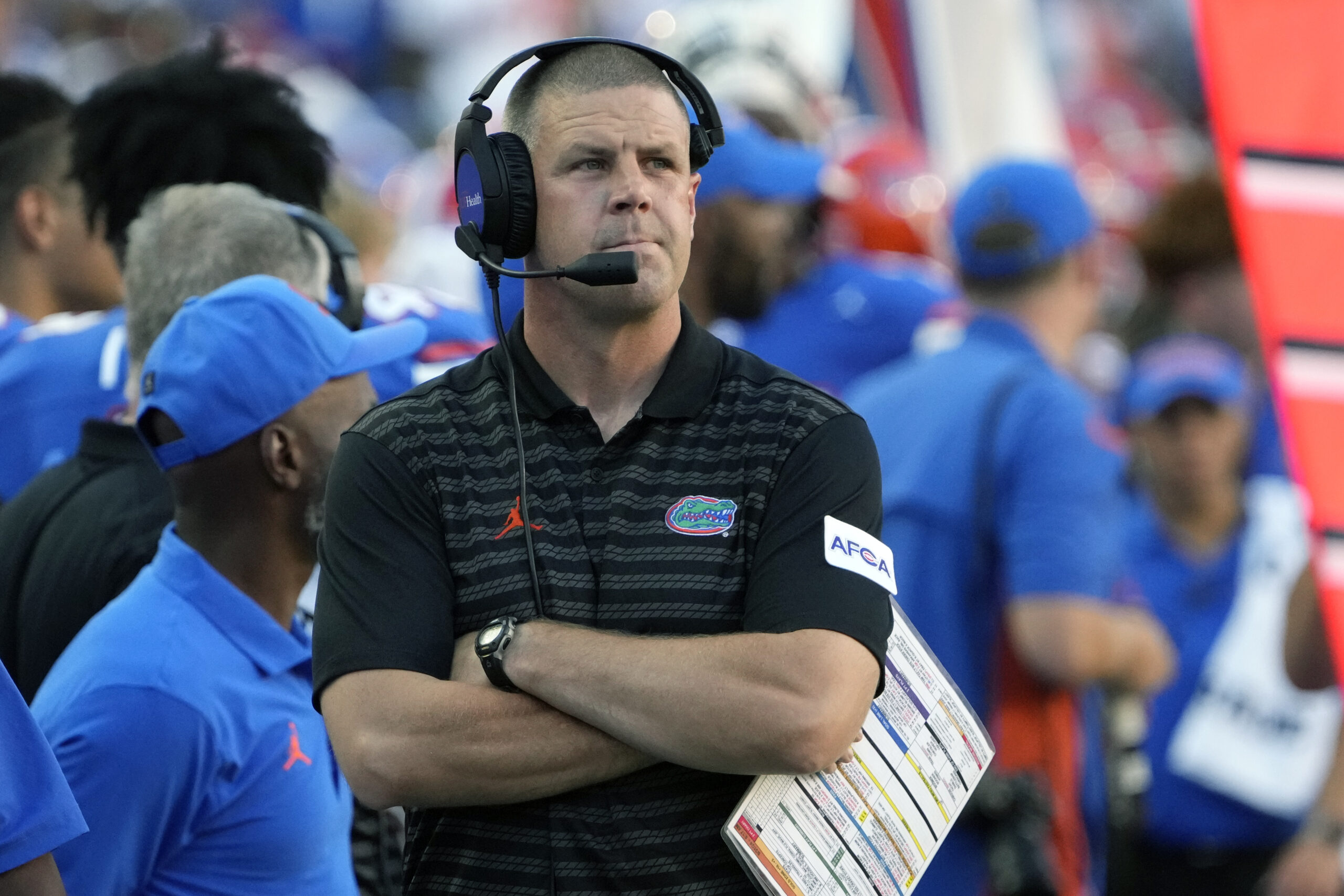
Will Stein is 36. A Kentucky native. Grew up attending Wildcats games. Former quarterback at Louisville. Signed a five-year deal in December 2025.
His coaching path tells you how he thinks:
- 2013-14: Graduate assistant and quality control at Louisville.
- 2015-17: Quality control at Texas.
- 2018-19: Offensive coordinator at Lake Travis High School. 26-4 record.
- 2020-22: Passing game coordinator, then co-OC at UTSA.
- 2023-25: Offensive coordinator and QB coach at Oregon.
That Oregon stint is what got him this job. Three seasons calling plays for one of the most efficient offenses in college football. But the path before Oregon matters just as much. He spent years grinding through quality control rooms. Learning systems. Building relationships.
He didn’t skip steps. The question is whether the steps he took are enough.
The Quarterback Track Record
This is the strongest line on Stein’s résumé. And it needs to be, because his entire identity depends on it.
Every starting quarterback under Stein’s college play-calling set a career-high completion percentage. Every one.
- Frank Harris (UTSA, 2022): 69.6%. Career best.
- Bo Nix (Oregon, 2023): 77.4%. The most accurate single season in college football history.
- Dillon Gabriel (Oregon, 2024): 72.9%. Career best.
- Dante Moore (Oregon, 2025): 72.8%. Career best.
Four quarterbacks. Four different skill sets. Four career peaks under the same play-caller.
That’s not an accident. Stein calls it “common sense football.” Attack defensive structures with efficient, schemed throws and explosive plays. His Oregon units ranked first among Power Four teams in three-and-punt avoidance (only 6.5% of drives) and generated the second-most explosive plays nationally.
But here’s the part nobody wants to say out loud: all four of those quarterbacks had elite talent around them.
Bo Nix had Oregon’s receiving corps. Dillon Gabriel had Oregon’s offensive line. The system worked because the supporting cast was already there. At Kentucky, Stein won’t have that luxury. He’ll have to prove the development is real, not just the play design.
That proof starts with Kenny Minchey.
The Quarterback Room: What Stein Has to Work With
This is where the résumé meets reality.
Cutter Boley was supposed to be the guy. The quarterback Kentucky’s previous staff recruited to be the future of the program. He entered the transfer portal and landed at Arizona State. Gone.
So here’s the depth chart Stein inherited:
- Kenny Minchey (Junior, transfer): The projected starter. Minchey is expected to step in as QB1. This is the first real test of Stein’s development chops at Kentucky. Not Oregon talent. Not UTSA upside. A transfer junior at a program that ranked 105th in total offense a year ago.
- Matt Ponatoski (4-star, 2026 signee): Signed in December 2025 and held firm through the coaching change. That’s a good sign. Ponatoski is the insurance policy and the future. If Stein is as good as his track record says, this kid should develop fast.
- JacQai Long (transfer): Depth piece. Portal addition who provides competition and a safety net.
- Brennen Ward: Roster depth. Not expected to compete for the starting job immediately.
Four quarterbacks. One proven developer. Zero margin for error.
If Minchey takes a meaningful step forward, Stein’s credibility goes through the roof. If Minchey looks the same or worse than what Kentucky had under Stoops, every question about the hire gets louder.
The entire narrative of Year 1 runs through the quarterback room.
The Roster Overhaul and Staff Assembly
Stein didn’t wait for spring practice to start building.
He salvaged Kentucky’s signing class within 48 hours of being hired. Thirteen high school signees. Then he went to work in the transfer portal. By mid-January: 34 additions. Seventeen on offense, 14 on defense, 3 on special teams.
The portal headliners:
- Lance Heard (OT, Tennessee): Former five-star. Immediate SEC-caliber anchor.
- Nic Anderson (WR, Oklahoma): Proven Power Four production at receiver.
- Jovantae Barnes (RB, Oklahoma): 1,281 yards and 12 touchdowns across three-plus seasons.
- Aaron Gates (DB, Florida): All-conference potential at nickel.
- Jamarrion Harkless (DL, Purdue): In-state kid from Frederick Douglass who turned down Louisville. That’s a statement.
On the recruiting trail, Rivals’ Steve Wiltfong projects Kentucky to land Seneca Driver in 2027. No. 1 tight end nationally. No. 25 overall. A Boyle County kid staying home.
The staff is fully assembled. Here’s what stands out:
- Coordinators: Jay Bateman (DC) from Texas A&M, where his defense ranked second nationally in sacks. Joey Sloan (OC) from LSU, where he helped develop Garrett Nussmeier.
- Oregon pipeline: Cutter Leftwich (OL) and Parker Fleming (special teams, inside WRs) followed Stein from Eugene. The system transfers with the people who know it.
- Continuity: Anwar Stewart (DL, Kentucky alum, on staff since 2020), Mike Hartline (QB development), Derek Shay (TEs). Stein kept what worked.
- Power hires: Tony Washington Jr. from Ohio State. Josh Christian-Young from Houston. Chad Wilt from Michigan State. James Gibson as the “Stars” coach, a hybrid nickel role signaling modern defensive philosophy.
- Louisville connection: Five former Cardinals on staff. The in-state network runs deep.
The infrastructure is built. Now it has to produce.
The Concerns
Nobody should pretend this hire is risk-free.
- First-time head coach: Stein has never run a program. NIL. Portal management. Recruiting. Staff management. Game-day decisions. Boosters. Media. All of it, all at once, for the first time.
- Oregon’s talent advantage: His offenses at Oregon operated with elite roster talent. Calling plays for Bo Nix with five-star receivers is different from calling plays for Kenny Minchey with three-star depth in the bottom third of the SEC.
- The Boley departure: Kentucky’s expected starter left for Arizona State. That’s not a crisis, but it’s not nothing. The QB room is workable. It’s not deep.
- Thin coordinator track record: Before Oregon, his only college OC experience was one season at UTSA and two years at a Texas high school. The Oregon results are spectacular. The sample is small.
- Brutal 2026 schedule: Alabama. At Texas A&M. LSU. At Oklahoma. At Tennessee. At Missouri. Louisville at home. Five games where Kentucky could be a double-digit underdog.
The upside is real. So is the volatility.
Coaches Hot Seat Hire Scorecard
| Factor | Assessment |
| Recruiting Ability | Aggressive. 34 portal additions in January (Heard, Anderson, Barnes, Harkless). 13 HS signees. Competing for 2027 five-stars. |
| Schematic Identity | Elite. Efficient, explosive, player-first. Every college QB peaked under his play-calling. |
| QB Development | Exceptional track record (Harris, Nix, Gabriel, Moore). Now must prove it with Minchey, Ponatoski, and less supporting talent. |
| Program Connection | Deep. Kentucky native. Grew up attending Wildcats games. Played at Louisville. |
| HC Experience | None. First-time head coach at any level. |
| Staff Building | Complete. Bateman (DC, Texas A&M), Sloan (OC, LSU), Oregon pipeline, Ohio State and Houston assistants. Five former Louisville Cardinals. |
| Contract Structure | $28.5M over five years ($5.7M AAV). 70% remaining salary buyout. Automatic extensions for CFP appearances. |
| Ceiling | If QB development translates, Kentucky becomes a consistent 7-8 win SEC program with occasional upsets. |
| Floor | Coordinator who can’t manage the full scope of an SEC head coaching job. Classic first-time HC flame-out. |
CHS Five-Pillar Composite Score
| Pillar | Score | CHS Read |
| Talent Acquisition | 7/10 | 34 portal adds, 13 HS signees, competing for 2027 five-stars. Resource-limited SEC job, but maximizing every avenue. |
| Player Development | 9/10 | Elite QB track record. Four QBs, four career peaks. Must now prove it translates without Oregon-level talent. |
| On-Field Results | TBD (6/10) | No HC sample. 2026 schedule is brutal. 5-7 or 6-6 meets Year 1 expectations given the slate. |
| Program Culture | 7/10 | Kentucky native. Staff fully assembled with strong mix of continuity and new blood. Energy is real. |
| Contextual Fit | 8/10 | Directly addresses UK’s biggest weakness. Smart contract structure. Sensible risk-reward profile. |
| COMPOSITE | 7.4/10 | Above-average SEC hire with high offensive upside and first-time HC risk. |
| HIRE GRADE: B+: Above-average hire that directly addresses Kentucky’s most glaring weakness. High upside, manageable downside. |
Stoops Era vs. Stein Hire
| Dimension | Mark Stoops (2013–25) | Will Stein (Incoming) |
| Record | 61-54 last 9 years; 7-20 SEC since 2022 | 0-0 as HC; elite coordinator track record |
| Offensive Identity | 105th nationally (2025); stagnant, predictable | Player-first scheme; No. 1 in P4 three-and-punt avoidance; top-2 explosive plays |
| QB Development | Inconsistent; revolving door; no pipeline | Every starting college QB peaked under his play-calling. Now has Minchey + Ponatoski |
| Recruiting | Strong in-state, limited nationally | 34 portal adds; 13 HS signees; Oregon pedigree plus Kentucky roots; 2027 five-stars |
| Contract Risk | $37.7M buyout crippled the department | $28.5M total; 70% buyout clause; automatic CFP extensions |
| Cultural Fit | Built the floor; program outgrew the identity | Kentucky native; full staff in 8 weeks; mix of continuity and new hires |
Hot Seat Outlook
Stein enters with one of the lowest hot-seat positions in the SEC.
Kentucky just absorbed a $37.7 million buyout and committed $28.5 million to Stein. Nobody is pulling the trigger early. He gets a minimum three-year runway unless results are catastrophic.
Here’s how we see it:
- Year 1 (2026): Grace period. The schedule is a gauntlet: Alabama, at Texas A&M, LSU, at Oklahoma, at Tennessee, at Missouri, Louisville at home. 5-7 or 6-6 meets expectations. Anything above 7 wins is a significant overperformance.
- Year 2 (2027): The inflection point. The roster should be more “his guys.” Patience thins. Back-to-back losing seasons push him into the 15-20 range on the CHS Index fast.
- Warning signs: Year 1 offense looks like rebranded Stoops-ball. Minchey doesn’t develop. Bottom-third nationally. Staff churn. Portal exodus. The Boley-to-Arizona State departure becomes a pattern, not an anomaly.
- Positive signs: Staff fully assembled with SEC pedigree. 34 portal additions. Competing for elite 2027 recruits. Minchey shows real improvement. The infrastructure is being built right.
CHS Projected 2026 Range: 40-60 on the Hot Seat Index. Monitor tier. Not under fire yet.
What to Watch in Year One
Forget the win-loss record for a moment.
With that schedule, the record is almost irrelevant as a standalone metric. Here’s what actually tells the story:
- Kenny Minchey’s development: This is the whole ballgame. Completion percentage. Decision-making. Does he look like a Stein-coached quarterback? If Minchey takes a real step forward, the hire looks brilliant. If he doesn’t, every question gets louder.
- Offensive identity: Does Kentucky look like a different team? Explosive play rate. Three-and-out frequency. Yards per play. The numbers will matter more than the scoreboard against Alabama.
- Matt Ponatoski’s trajectory: The 4-star signee who stayed through the coaching change. Is he developing behind Minchey? Is the pipeline being built? Year 1 reps for a freshman tell you a lot about the program’s future.
- Recruiting trajectory: The 2027 class. Seneca Driver. In-state battles with Louisville. If Stein keeps winning those fights, the program is trending up.
- Staff stability: Does the staff gel? First-time head coaches live and die by the people around them. Early departures would be a red flag.
The wins will follow if those indicators point in the right direction. Or they won’t. And we’ll know by Year 2.